
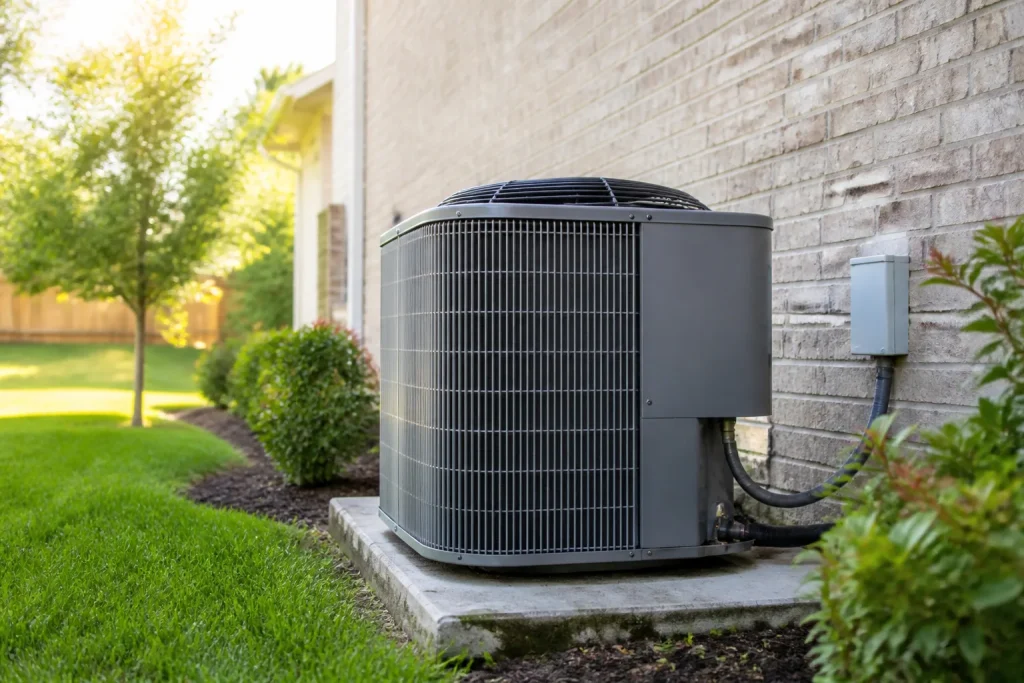
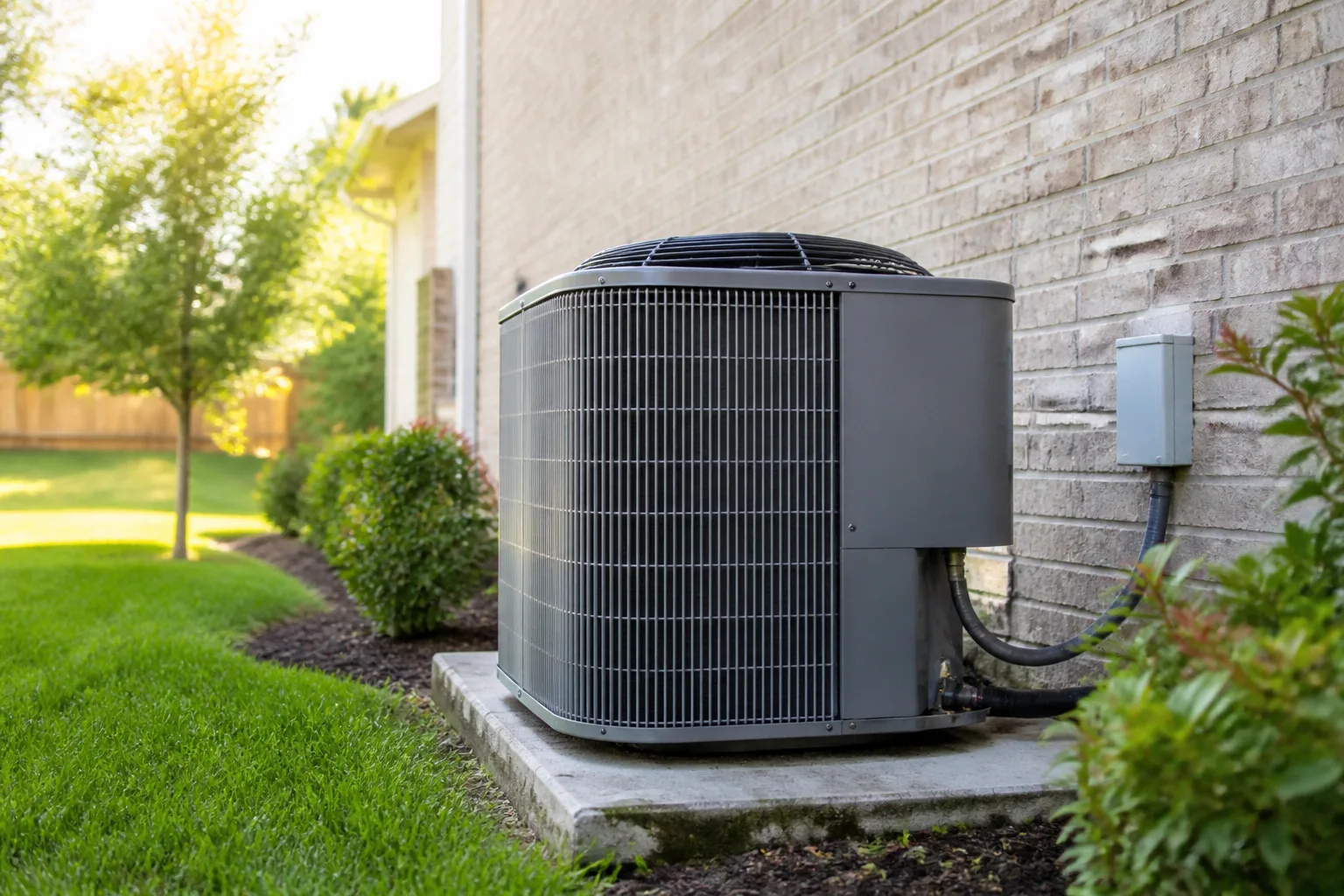
Trane AC Repair in Irving: A Homeowner’s Guide
If your Trane system is 12 to 15 years old and needs a compressor, the repair often costs more than the unit is worth. That’s the hard truth behind Trane’s “It’s Hard to Stop a Trane” reputation: the equipment runs long enough that homeowners in Irving keep paying for big repairs on systems that are close to the end of their service life anyway. Spending $900 to $1,400 to keep a 14-year-old Trane limping along only makes sense if the rest of the system is solid and a replacement is years away, not months. This guide helps you tell the difference. And if you’d rather not sort it out yourself, call (855) 473-9031 for a free estimate.
Which Trane model do you have in your Irving home?
Trane sells three broad families of residential equipment, and each one tends to fail in its own way as it ages. Knowing which you have tells you what to watch for and roughly when.
- XR series (XR13, XR14, XR15): The workhorse line, and the most common Trane we see across Irving’s older subdivisions and starter neighborhoods. These are simpler single-stage or two-stage systems. Their weak spots are the parts that switch on and off: capacitors, contactors, and fan motors. Failures here usually show up between years 10 and 14.
- XL series (XL16, XL18, XL20): Higher-efficiency two-stage equipment, common in homes built or upgraded over the past decade and a half. More electronics, more sensors, and variable-speed blowers mean the control board and communicating components become the failure points rather than the compressor.
- XV series (XV18, XV20i): Variable-speed, fully communicating systems. These are the most efficient and the most dependent on brand-specific diagnostics. They run at low capacity for long stretches, so the compressor itself often outlasts the electronics around it.
One thing we’ve noticed in our experience: the higher-end the Trane, the more a proper diagnosis matters. An XR with a bad capacitor is a straightforward fix. An XV that won’t modulate needs someone who can actually read what the system is telling them. If you want a technician who already knows your equipment, start with AC repair and skip the guesswork.
How do you read a Trane serial number to find its age?
Your Trane serial number is the fastest way to know exactly how old the equipment is, and it matters because the repair-or-replace decision hinges on age. You’ll find the data plate on the outdoor condenser cabinet, usually on a side panel. The serial is a string of letters and numbers, and the manufacture date is encoded in it.
Here’s the practical part: Trane’s serial formats have changed several times over the years, and the position that carries the year and month varies by format. Rather than guess and get it wrong, read the serial off the plate, note the model number right beside it, and have us or any Trane-familiar shop confirm the date. A wrong age estimate can push you into replacing a system that had good years left, or into repairing one you should have retired.
While you’re at the data plate, write down the model and serial of both the outdoor unit and the indoor air handler. That pair of numbers is what a warranty check runs on. Trane’s equipment warranties are generally tied to the original installation and registration, and some coverage can transfer to a new owner within a limited window. Whether your specific unit still has transferable coverage depends on when it was made and how it was registered, so verify rather than assume. Keep that plate information somewhere you’ll find it again, because it saves time on every service call from here on.
When does repairing a Trane stop making financial sense?
The math is simpler than most homeowners expect. The general rule of thumb in the trade is this: if a single repair costs more than roughly a third of what a new system would run, and the equipment is past about 12 years old, replacement usually wins. On a Trane, that line gets tested often, precisely because the brand’s durability makes people reluctant to let go.
Here’s how that plays out with typical Irving figures. A compressor replacement on a 14-year-old Trane commonly lands in the $900 to $1,400 range for the part and labor. A full system replacement runs considerably more than that, so the repair looks affordable by comparison. But if that same 14-year-old system is going to need replacement within the next year or two regardless, the compressor money is gone the moment the new unit goes in. You paid to keep an old system alive for a few more months. That’s the trap.
Three questions settle it:
- What’s the age? Past 12 years on a Trane, weigh every major repair carefully. Past 15, lean toward replacement.
- How big is the repair relative to the system’s value? A capacitor or contactor is minor. A compressor or a failed evaporator coil is major.
- What’s the rest of the system’s condition? A healthy air handler and ductwork with one bad component may be worth fixing. A system with multiple aging parts is not, and that’s true whether it wears a Trane badge or a Goodman, Rheem, York, or Daikin one.
This is where brand-neutral diagnosis earns its keep. We’re not paid to steer you toward new equipment or away from it. We tell you what the system’s condition supports, and you decide. That’s how AC installation should follow a repair conversation, not hang over it.
Why Trane ComfortLink II systems need the right technician
If your home has a Trane ComfortLink II communicating system, the thermostat and the outdoor unit talk to each other digitally rather than through simple on/off wiring. That’s great for efficiency and comfort, and it’s a problem when the person working on it doesn’t have the tools to read the communication.
A generalist who shows up without brand-specific diagnostic equipment will fall back on guessing. On a communicating system, that means parts get swapped on suspicion. What to ask before you hire anyone for Trane work:
- Do you carry the diagnostic tools for Trane communicating systems, or will you be working from generic readings?
- Have you serviced ComfortLink II equipment before? Ask them to describe it, not just nod.
- Are you an HVAC specialist, or does your company also do plumbing and electrical? A single-trade shop spends all its time on systems like yours.
We’re factory-familiar with nine major brands, including Trane, Carrier, Lennox, Bryant, and American Standard, and we’ve worked the Trane line long enough to know its quirks. You shouldn’t have to explain your equipment to your technician. At Kingsley AC Repair, the person who arrives already knows the platform. Nine brands, one standard, and the same bar applies to a ComfortLink II system as to any other unit we touch.
Capacitors, contactors, and the summer failure window
The two parts that fail most on aging Trane condensers are the run capacitor and the contactor, and both have predictable timelines. Capacitors degrade gradually, so the system keeps running while drawing more current, which stresses the compressor and fan motor. By the time it fails outright, it’s usually the hottest week of the year. Contactors wear at their points and start chattering or sticking before they die.
During a service visit, replacing a capacitor that’s already reading low or a contactor that’s visibly pitted is often the smarter move. It’s an inexpensive part and it prevents the mid-July breakdown that leaves you waiting on a repair while the house heats up. We don’t sell parts people don’t need, but we do point out the ones that are on their way out, because a planned replacement beats an emergency one every time. Mild winters here mean these systems run hard for a long cooling season, and that cycles those parts faster than you’d think.
If you have an aging Trane that’s been struggling through the heat, it’s worth having it looked at before the next heat wave arrives. Heating and cooling, handled, including the furnace side when the season changes. To book a visit, call (855) 473-9031. We answer 24/7. Fast dispatch from 7am to 7pm, Sunday through Friday.
The Bottom Line
The short version: a Trane is built to last, and that’s exactly why you have to be disciplined about when to stop repairing it. Use the serial number to confirm the age. If the system is past 12 years and the repair is major, do the math on replacement before you spend the money. If it’s a minor part and the rest of the system is healthy, fix it and keep going. And on a ComfortLink II system, make sure whoever works on it has the right diagnostic tools.
Kingsley AC Repair has been serving Irving since 2014, and we’re a single-trade HVAC shop, not a general contractor. We repair and install AC and furnaces, we know nine major brands, and we diagnose before we recommend. If you’re in Irving and need help, Kingsley AC Repair offers free estimates. Call (855) 473-9031. We answer 24/7. Fast dispatch from 7am to 7pm, Sunday through Friday, and we’re closed Saturday.
Frequently Asked Questions
Usually only if the repair is small. At 14 years, a minor fix like a capacitor or contactor is reasonable, but a major repair such as a compressor at $900 to $1,400 typically isn’t, because the system is likely to need full replacement within a year or two anyway. Get the age confirmed from the serial number, then weigh the repair cost against replacement. Call (855) 473-9031 for a free estimate and a straight answer.
Read the serial number from the data plate on the outdoor unit. Trane encodes the manufacture date in the serial, but the format has changed over the years, so the safest move is to have a Trane-familiar technician confirm it from the serial and model number. That date determines whether you’re making a repair or a replacement decision.
Yes, in practical terms. ComfortLink II is a communicating system, and it needs brand-specific diagnostic tools to read properly. A technician without those tools will guess at parts instead of diagnosing. Ask any company upfront whether they carry the tools for Trane communicating equipment before you book.
Figure roughly $900 to $1,400 for the part and labor depending on the system. Before approving it, check the unit’s age and overall condition. On a system past 12 to 15 years, replacement often makes more sense than the compressor repair. For an exact figure on your system, call (855) 473-9031. Estimates are free.
Written by the team at Kingsley AC Repair, serving Irving since 2014.
Need HVAC Help?
Call Kingsley AC Repair - licensed & insured, here with fast help in Irving.
(855) 473-9031