
Last updated November 14, 2026
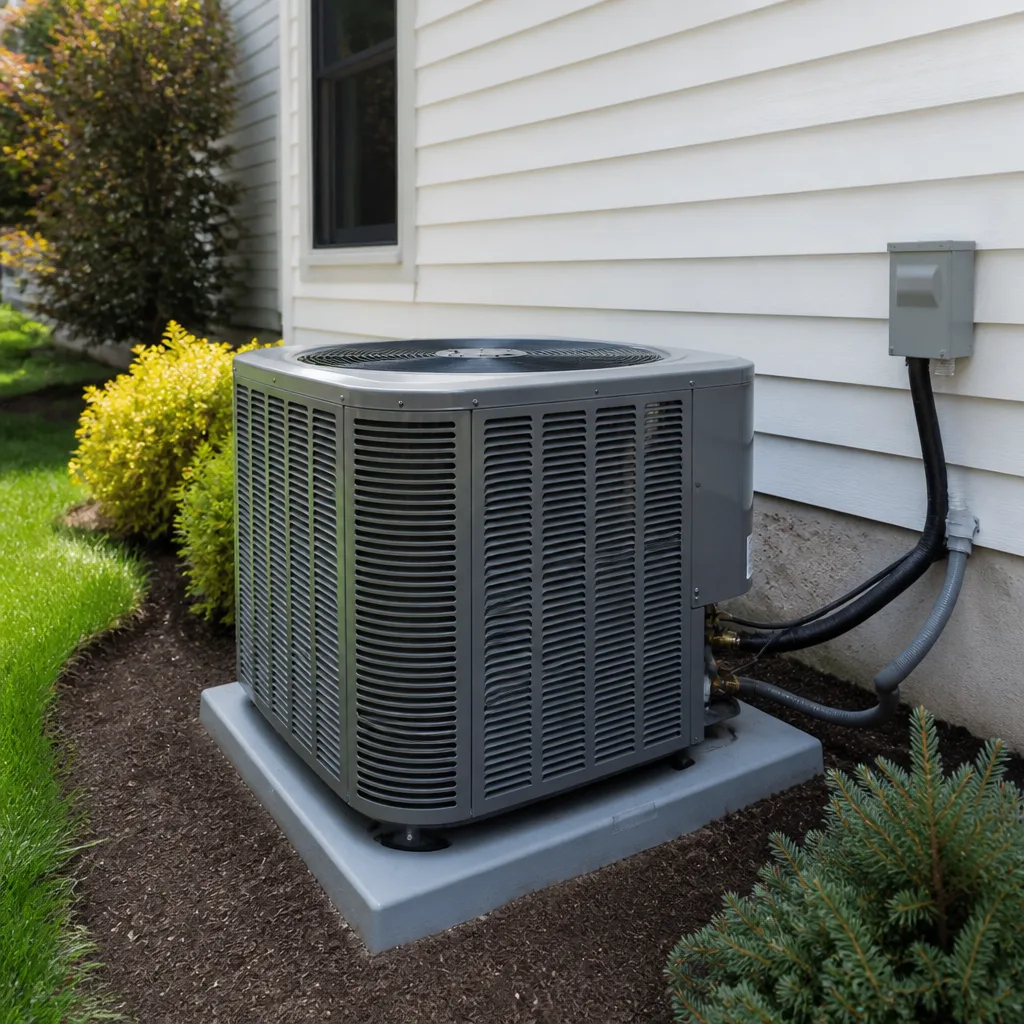 AC repair
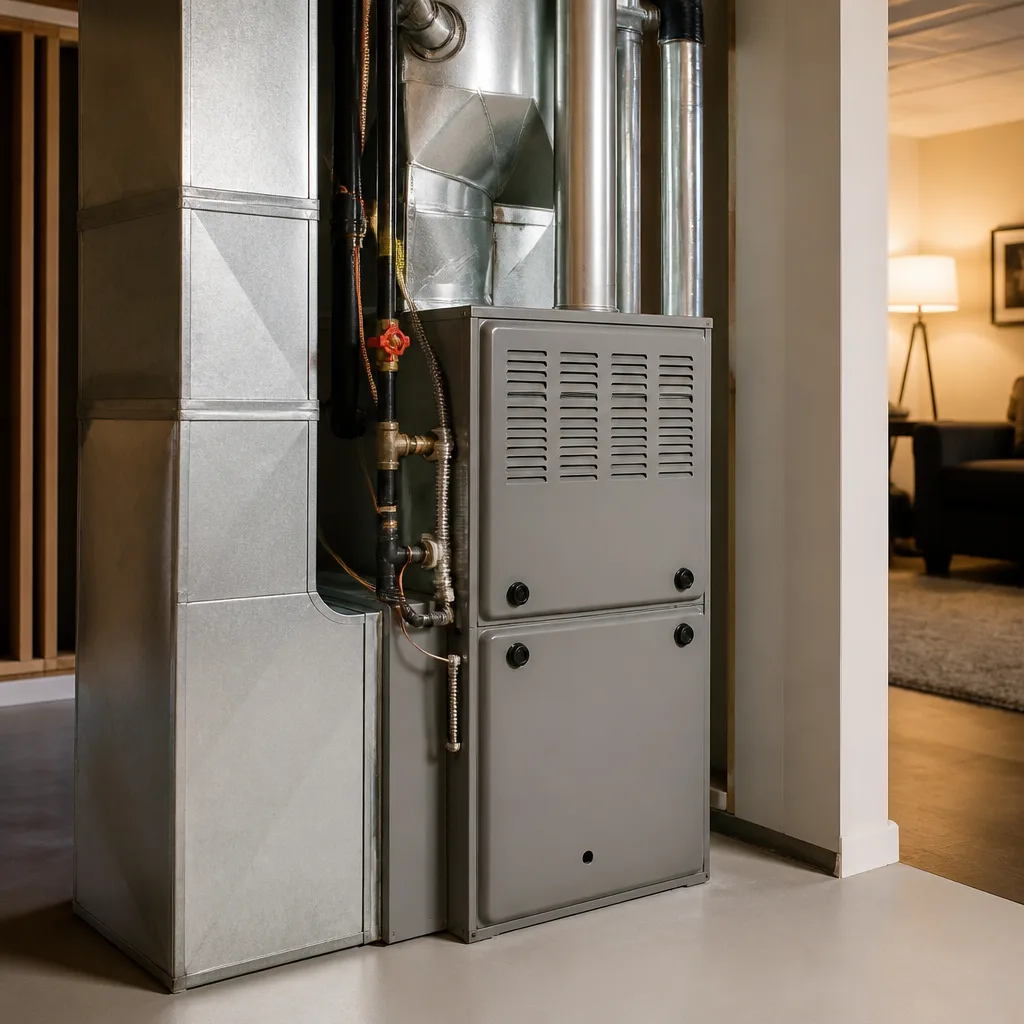 Furnace & heating
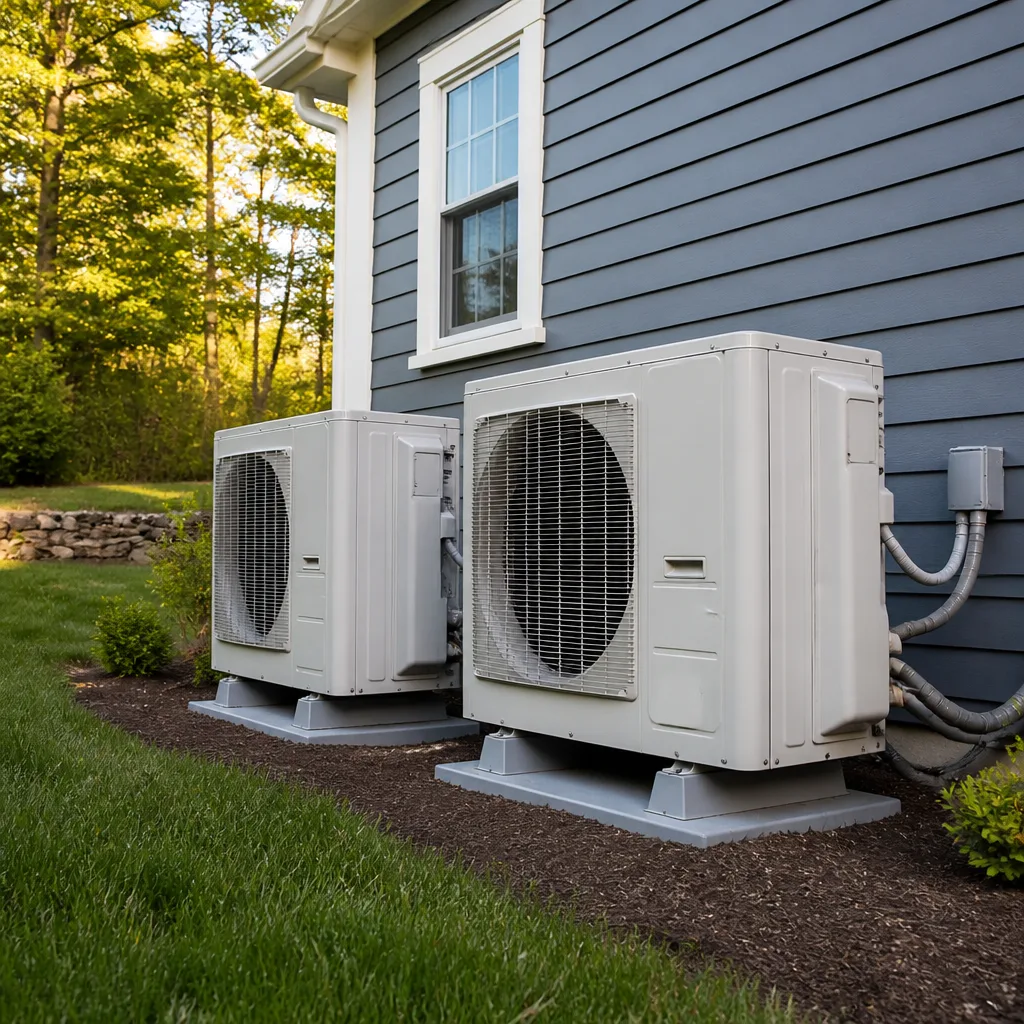 Heat pumps
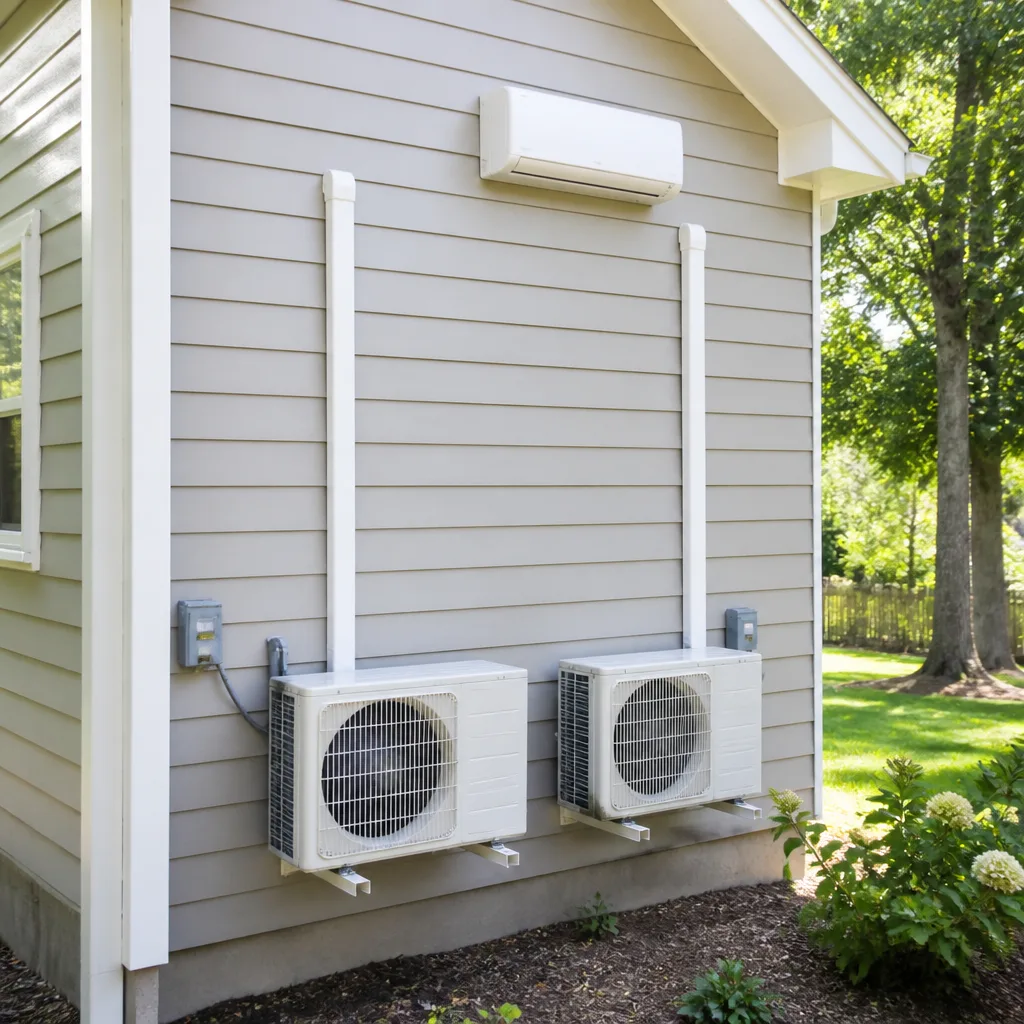 Ductless mini splits
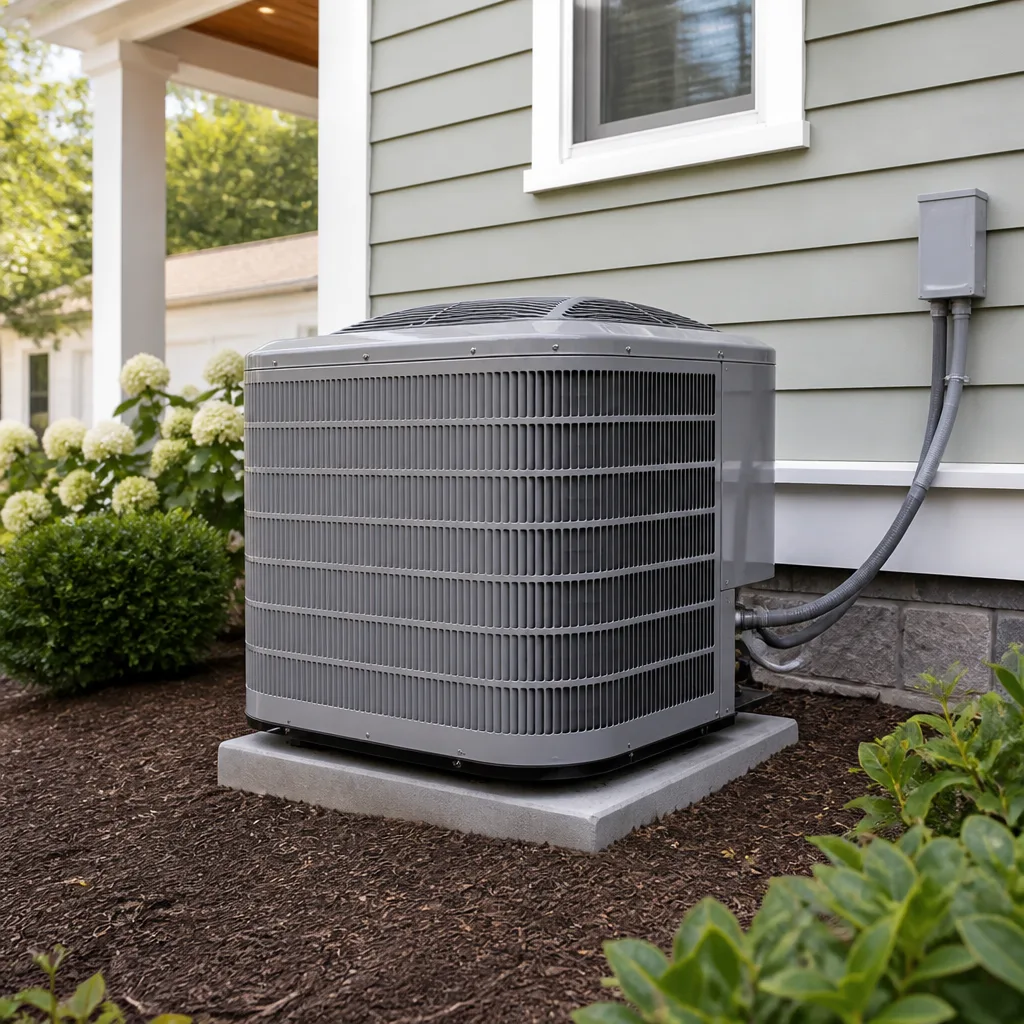 Carrier
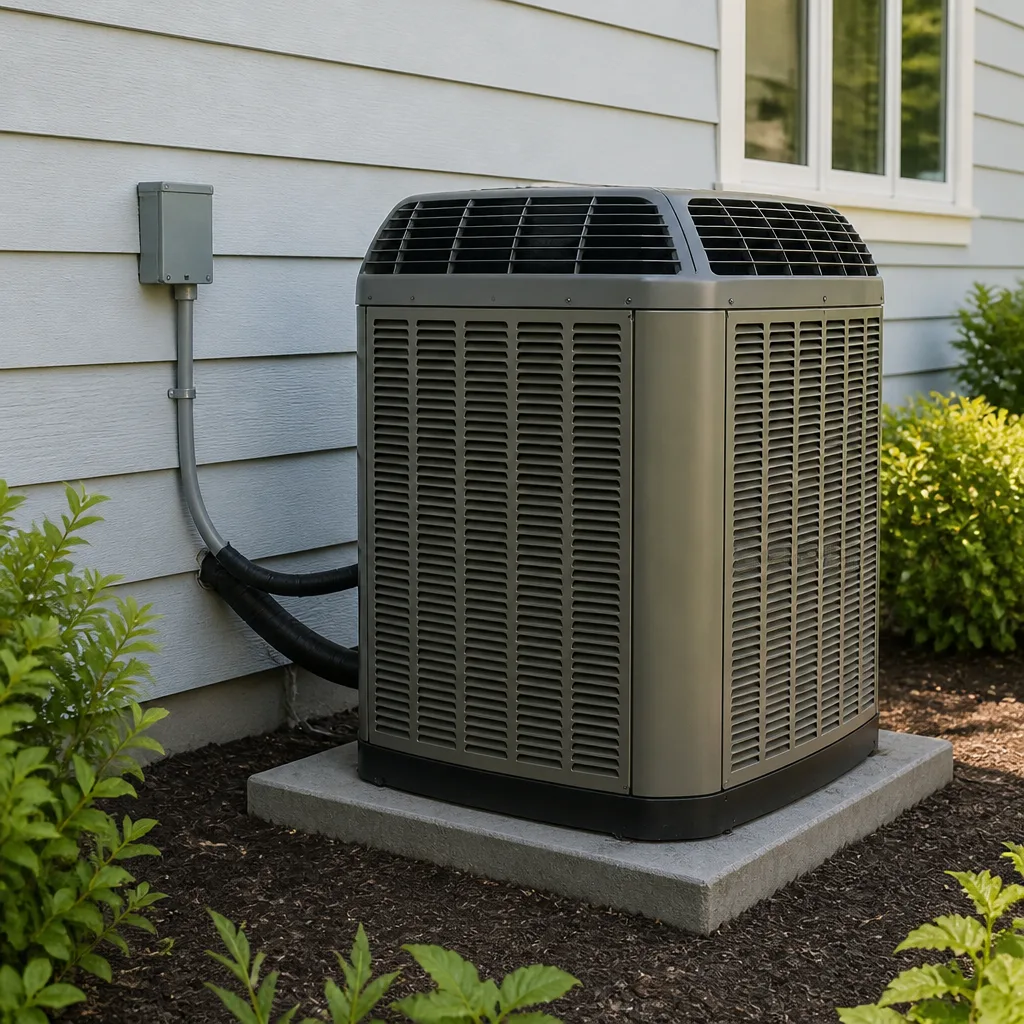 Trane
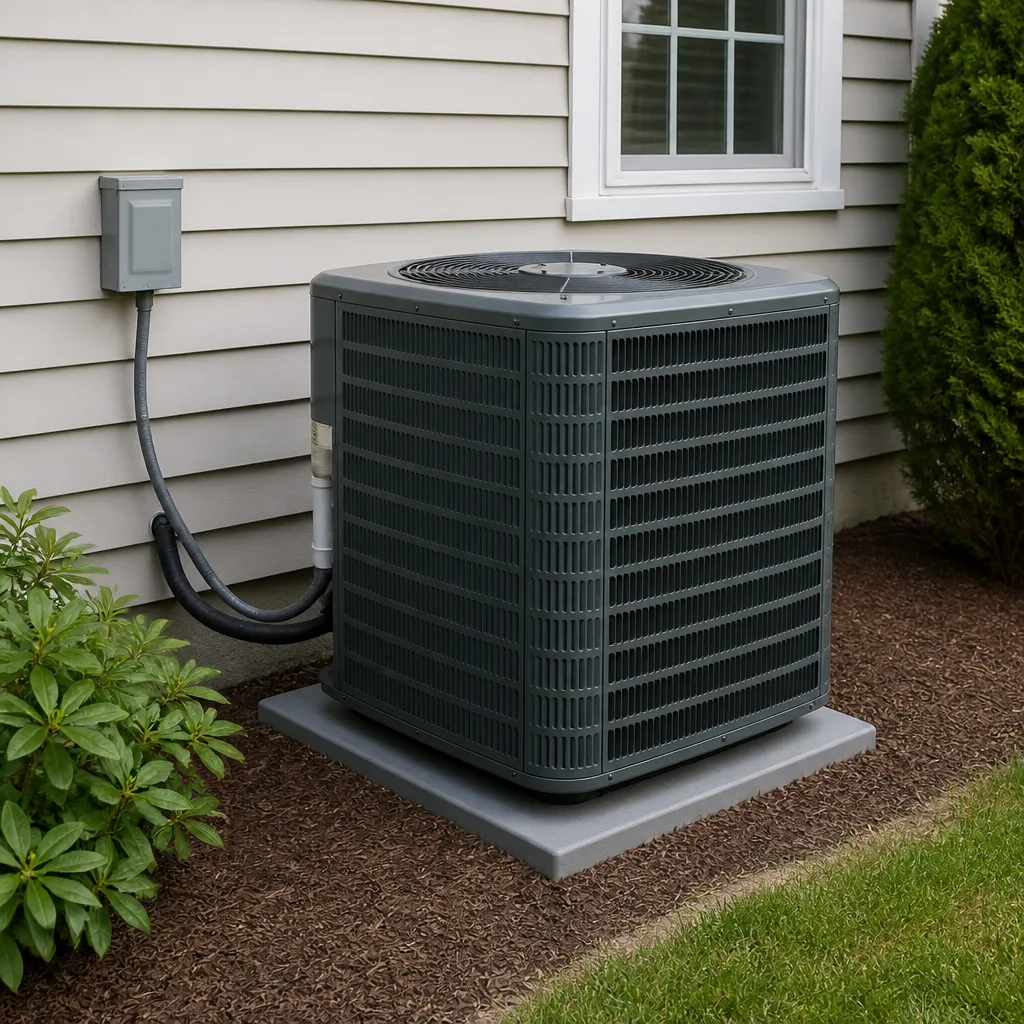 Goodman
Seasonal tune-up and full diagnostic on your Carrier, Trane, or Goodman system - readings shown to you before any repair is proposed
Diagnosis first, numbers second - you approve the repair price before a single part goes in.
Get your free estimateAC Repair Maintenance Checklist for Irving Homeowners
Most AC maintenance checklists floating around the internet were written somewhere with four real seasons and a furnace that earns its keep. “Change your filter every 90 days” is advice built for a climate nothing like ours. In Irving, a filter can load up in five or six weeks during a long cooling season, and a coil that stays wet for months on end is where the real money goes. This guide is organized around the calendar and equipment we actually see here: month-by-month tasks tuned to Irving’s climate, service intervals tied to the specific brand on your condenser, and a plain answer to what you can check yourself versus what Texas law says needs a licensed technician. We’ll also show you how to keep records that protect your manufacturer warranty when a claim comes up.
Quick Answer
An Irving homeowner should check the air filter every 30 days through the cooling season, get a professional tune-up before the heat arrives, keep the outdoor coil clear of debris, and record each service with dates and invoice copies. Brand matters: the service interval for a Carrier or Trane system isn’t the same as what Lennox or Bryant flags as warranty-critical. Do the monthly checks yourself and leave refrigerant, electrical, and coil-deep-cleaning work to a licensed HVAC technician.
Styles & brands we work with
- AC repair
- Furnace & heating
- Heat pumps
- Ductless mini splits
- Carrier
- Trane
- Goodman
Table of Contents
- The Irving Cooling Season: A Month-by-Month Calendar
- Filter Frequency: Why 90 Days Doesn’t Work Here
- Brand-Specific Service Intervals for the Nine Major Manufacturers
- Coil Cleaning and Irving’s Dust and Pollen Load
- What You Can Check Yourself vs. What Needs a Licensed Tech
- Documenting Maintenance to Protect Your Warranty
- Warning Signs That Mean Repair, Not Maintenance
- Common Mistakes to Avoid
The Irving Cooling Season: A Month-by-Month Calendar
Irving runs a long cooling season. Spring warms fast, summer holds high heat for months, and warm days can stretch well into fall. That shape means an AC system here works harder across the year than a unit in a milder climate, and a maintenance schedule built on “spring and fall” labels leaves gaps. Here’s a calendar that matches the actual load.
- February: Book your pre-season tune-up before the rush. Technicians have more room in the schedule now than in May. Change the filter.
- March: Clear the outdoor unit of winter debris, leaves, and dirt. Check the pad for settling. Change the filter.
- April: First big cooling test. Run the system on a warm afternoon and listen for unusual noise. Change the filter.
- May: Filter change. Check condensate drain flow at the indoor unit. Note any musty smell in the supply air.
- June through August: Peak load. Check the filter every 30 days without exception. Keep two feet of clearance around the outdoor coil. Watch for ice on the indoor coil or refrigerant lines, which signals a problem.
- September: Filter change. Clean pollen and dust from the outdoor coil fins. This is a good check-in point for anything that ran rough during summer.
- October: Filter change and a look at the condensate pan for standing water or algae growth. Book a heating check before furnace season, since the same ducts and blower serve both.
- November and December: Filter change. If you run the heat, listen for rattle or short-cycling and note it.
This isn’t a generic spring-and-fall list. It’s built for a homeowner running a name-brand unit through nine months of real cooling demand. If you’d rather not track it yourself, our AC repair team can do the pre-season walkthrough and hand you a written report of what was actually found.
Filter Frequency: Why 90 Days Doesn’t Work Here
Ninety days is a guess written for a milder climate with a shorter cooling season. In Irving, a filter catches a heavy dust and pollen load while the system runs far more hours per year, and a clogged filter is the fastest path to a restricted airflow problem. Restricted airflow means the evaporator coil runs colder than it should, condensation can’t drain properly, and a wet coil becomes a breeding ground for biological growth. That’s the sequence worth avoiding, and it starts with something as simple as a filter.
Here’s a practical rule set we give homeowners:
- 1-inch pleated filters: check every 30 days and replace when visibly gray, often every 45 to 60 days in peak summer. Homes with pets or near active construction go shorter.
- 4- to 5-inch media filters: check monthly, replace every 6 to 12 months depending on load. These hold more dust before they choke airflow.
- Washable filters: rinse every 30 days in the cooling season and let them dry fully before reinstalling.
Don’t over-filter, either. A very high MERV rating on a 1-inch filter can add static pressure that a residential blower wasn’t designed for. When in doubt, match the filter size and rating the manufacturer specifies for your system rather than buying the highest number on the shelf. If you’re unsure what your unit wants, a technician can tell you in one visit, and our Kingsley AC Repair team checks filter spec and airflow as part of a standard call.
Brand-Specific Service Intervals for the Nine Major Manufacturers
Here’s the part that generic checklists skip entirely. Manufacturers write their own maintenance and warranty language, and the details differ. A Carrier system and a Trane system don’t carry identical service recommendations, and what Lennox or Bryant treats as a warranty-critical condition (say, documented annual professional service) may be worded differently from what American Standard requires. Following your own brand’s documentation is the difference between a claim that goes through and one that gets denied on a technicality.
We’re factory-familiar with nine major brands, which means we read the right manual without guessing. These are the manufacturers we’re trained and equipped to service: Carrier, Trane, Lennox, Goodman, Rheem, York, Daikin, Bryant, and American Standard. Here’s how that plays out in practice:
- Carrier: Many Carrier residential systems tie warranty coverage to documented annual professional maintenance. Missing years can void parts coverage even when the failure itself was a manufacturing defect.
- Trane: Trane emphasizes airflow and charge verification as baseline service items. A tech who skips a superheat or subcooling check isn’t doing a real tune-up.
- Lennox: Lennox is specific about coil cleanliness and drain maintenance in its service literature. A dirty coil is one of the most common reasons a repair escalates into a replacement.
- Bryant: Bryant shares engineering lineage with Carrier, so similar record-keeping and annual-service expectations apply. The test procedures are close but not identical.
- American Standard: American Standard service guidance mirrors Trane in many respects. Charge and airflow verification matters as much as filter changes.
You shouldn’t have to explain your equipment to your technician. When you call, tell us the brand and model and we’ll arrive knowing how that system wants to be serviced. Nine brands, one standard. That’s the idea behind the Kingsley name, and every job gets held to it.
Coil Cleaning and Irving’s Dust and Pollen Load
Manufacturer minimums are just that: minimums. They’re written for an average climate and an average dust load. Irving runs higher than average on both counts for much of the year, so coil cleaning should follow the actual load, not the minimum printed in the manual. In our experience, an indoor evaporator coil here benefits from a professional cleaning more often than the once-a-year minimum would suggest in a heavy-use home.
Two coils matter:
- Indoor evaporator coil: Sits in the air handler and gets wet every cooling cycle. A dirty or biologically fouled coil reduces cooling capacity and can produce that musty smell in the supply air. This is the coil that needs professional cleaning, and it’s not a homeowner job: the refrigerant circuit and the coil enclosure are involved, and opening either requires a licensed tech.
- Outdoor condenser coil: Sits in the open air and collects pollen, cottonwood fluff, dust, and grass clippings. You can and should remove surface debris yourself by hand and with a gentle rinse from the outside in. But a deep clean that improves heat transfer usually calls for a technician, especially when the fins are packed.
How often? For a home near a busy road with pets and mature trees, plan on a professional evaporator coil clean tied to the pre-season tune-up. A quieter, cleaner home can go longer. The right call is a visual inspection at the pre-season visit: if the coil looks fouled, it gets cleaned that visit. As an Irving homeowner, you’re running a lot of cooling hours, so it pays to check.
What You Can Check Yourself vs. What Needs a Licensed Tech
Homeowners ask this a lot, and the honest answer depends on what’s involved. Filters, outdoor coil debris, condensate drain flow, and thermostat settings are all fair game for a careful homeowner. Refrigerant handling, electrical diagnostics inside the cabinet, gas work on the heating side, and anything requiring opening the refrigerant circuit are entirely different territory. In Texas, refrigerant handling requires EPA Section 608 certification, and electrical and gas work is regulated by state licensing and local code. That means the tasks below belong to a licensed technician, and DIY attempts here can void your warranty and create real danger.
Safe for a homeowner:
- Filter changes, filtered by your brand’s spec.
- Removing leaves and debris from around the outdoor unit.
- Checking that the condensate drain line is flowing (look for standing water at the pan).
- Testing the thermostat, changing batteries, and verifying setpoints.
- Keeping two feet of clearance around the condenser and hosing down the exterior fins gently.
For a licensed tech only:
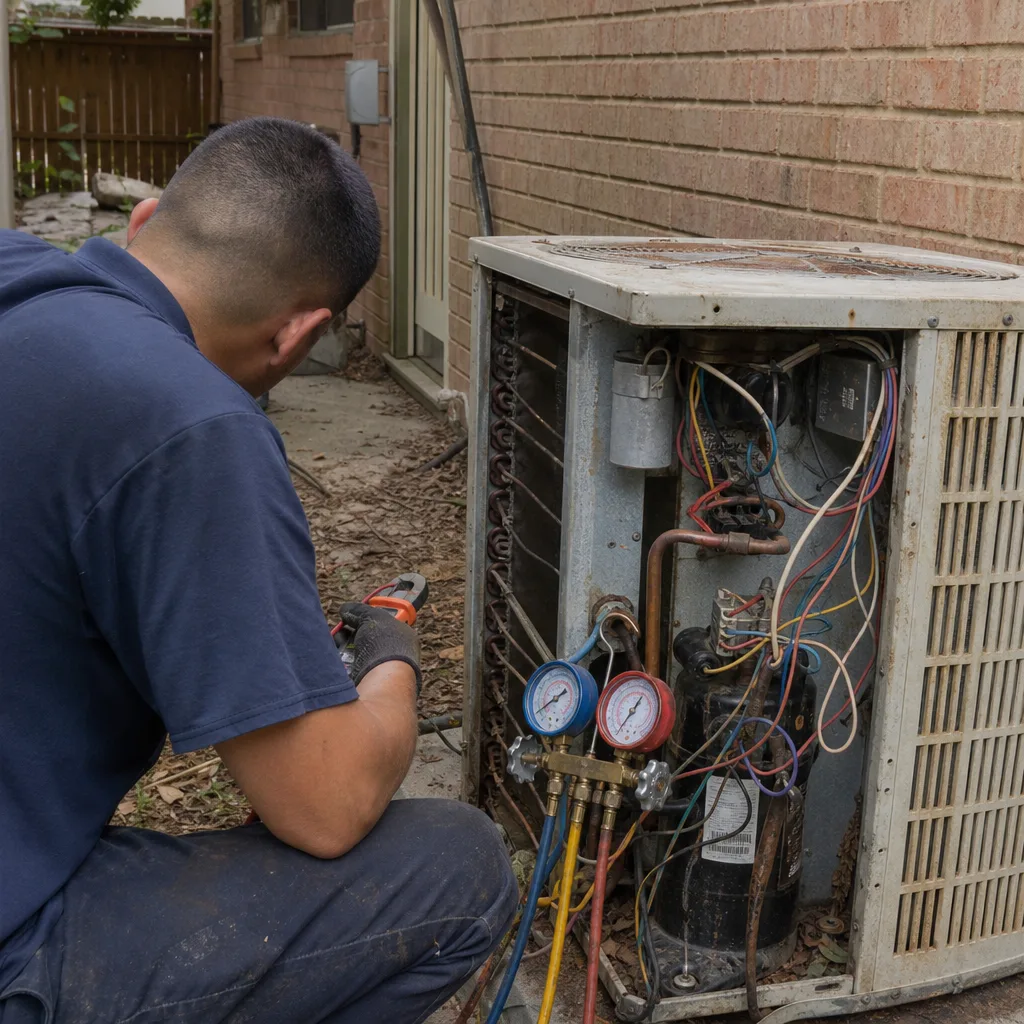
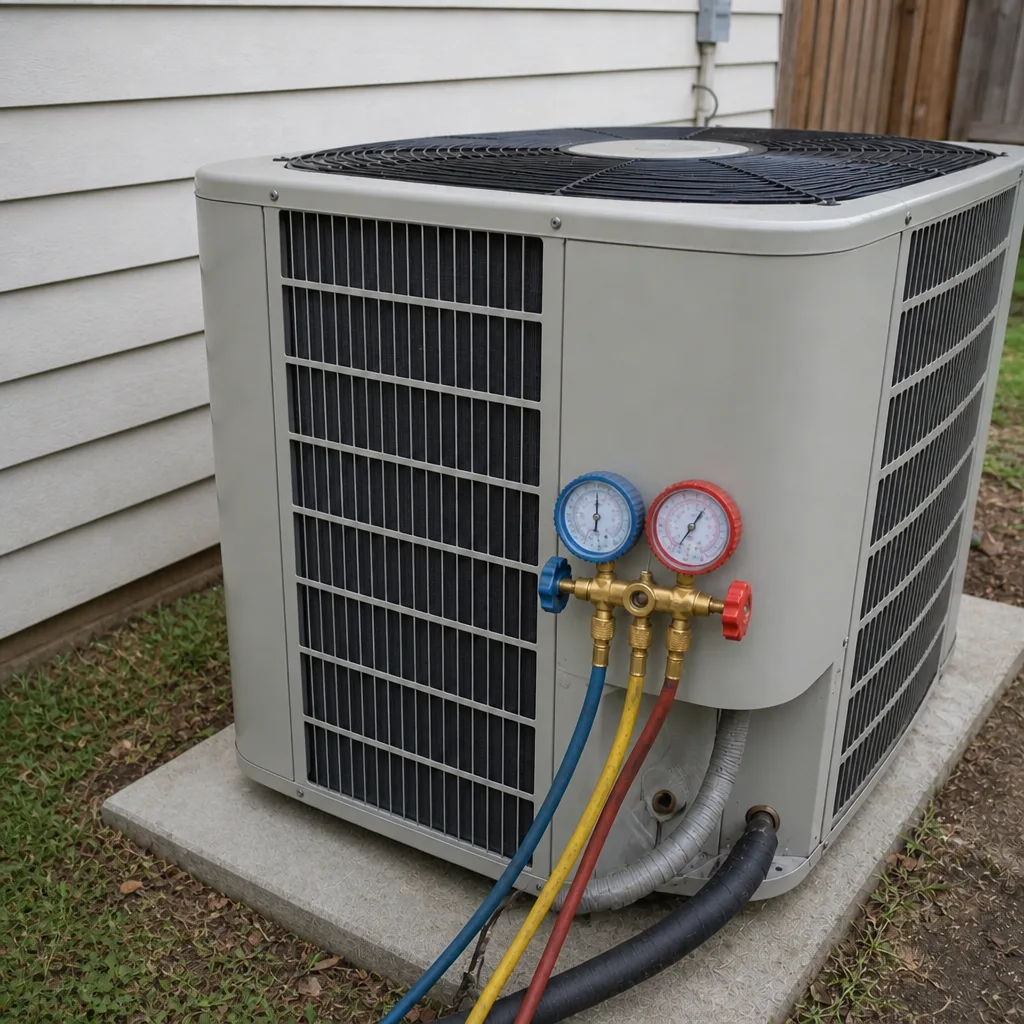
- Checking refrigerant charge (superheat and subcooling readings).
- Cleaning the indoor evaporator coil.
- Electrical diagnostics inside the air handler and condenser cabinet. High-voltage components and capacitors can shock even after power is off.
- Any component on the heating side, including gas lines and the heat exchanger on a furnace. There’s real carbon monoxide risk in that equipment.
- Opening the refrigerant circuit or evaluating a compressor.
If a task involves opening a panel, touching a wire, or handling refrigerant, it needs a licensed professional. Call (855) 473-9031. We answer 24/7. Fast dispatch from 7am to 7pm, Sunday through Friday.
Documenting Maintenance to Protect Your Warranty
Manufacturers don’t just want the work done; they want it recorded. A warranty claim that hinges on “annual professional maintenance was performed” gets denied when there’s nothing in writing. Keeping clean records is one of the cheapest things you can do, and it directly affects how much a repair or replacement costs you later. Here’s how to do it well.
- Keep every invoice. A PDF of each service visit with the date, technician name, and what was performed. Don’t rely on the contractor to store it for you.
- Note the model and serial number. Write them on the inside cover of a folder with your other home records. A warranty claim almost always starts with those two numbers.
- Log your own checks. A simple note on your phone or calendar for each filter change covers the parts of maintenance you do yourself.
- Photograph the equipment. Clear photos of the indoor and outdoor units, the data plates, and the coils at each visit create a paper trail the manufacturer can read.
- Register the equipment. Most manufacturers have a limited window after installation to register the unit and extend parts coverage. If you bought a home with an existing system, check whether the previous owner registered it.
- Keep service reports, not just a checkmark. A one-line “tune-up performed” note is weak evidence. A report with measured readings (charge, temperature split, static pressure) is strong evidence.
That’s why we put what we found in writing at each visit. If a warranty claim ever comes up, you’ll have the document you need. When it’s time for a AC installation, the record of consistent maintenance also tells you whether to repair or replace, because you’ll know the unit’s real service history.
Warning Signs That Mean Repair, Not Maintenance
Maintenance keeps a healthy unit healthy. But some symptoms mean something has already failed, and no amount of filter-changing will fix it. Here’s how to tell the difference between “schedule a tune-up” and “call for repair today.”
- Ice on the indoor coil or refrigerant lines: A sign of low refrigerant or a restricted airflow problem, not a reason to turn the thermostat down. Shut the system off at the thermostat and call for diagnosis.
- Warm air from the vents when cooling is on: Could be a failing compressor, low charge, or a thermostat or control fault. This needs hands-on diagnosis.
- Musty or damp smell in the supply air: Points to a wet coil, standing condensate, or biological growth. Clean the drain and get the coil inspected.
- Short-cycling: The unit turns on and off in rapid cycles. This strains the compressor and shortens its life. It’s a repair call, not a maintenance item.
- Rattling, grinding, or a loud clunk on startup: These are mechanical or electrical symptoms that get worse with delay.
- A sudden spike in electricity use with normal comfort settings: A struggling system draws more power. That’s worth a diagnostic visit before summer peak.
When you see any of these, our AC repair team can come out and diagnose it. We’re brand-agnostic on recommendations: what the system actually needs drives our advice, not what’s easiest to sell.
Common Mistakes to Avoid
- Treating 90 days as the filter interval. That schedule was written for a shorter cooling season. In an Irving summer, a filter can be loaded in six weeks. Change on condition, not on a date.
- Letting the outdoor coil pack with pollen and grass. A choked condenser raises system pressure and shortens the compressor’s life. Clear the debris and check the fins every month.
- Skipping the annual professional visit to save money. A recorded annual maintenance visit is often what keeps a manufacturer warranty intact. Missing it can cost more than the tune-up ever would.
- DIY coil cleaning or refrigerant top-offs. Refrigerant handling requires certification, and opening an air handler panel exposes live high-voltage components. A short call is cheaper than an injury or a voided warranty.
- Ignoring the drain line until it backs up. A plugged condensate drain can cause water damage to ceilings and floors, and in Irving’s humid summer it’s a common call. Check the drain flow at every filter change.
- Buying the highest-MERV filter on the shelf. Extra restriction on a 1-inch filter can hurt airflow and cooling efficiency. Match the rating to your system’s spec.
- Keeping no records. Service invoices, model and serial numbers, and dated notes on your own checks are the evidence a warranty claim needs. Without them, you have no paper trail.
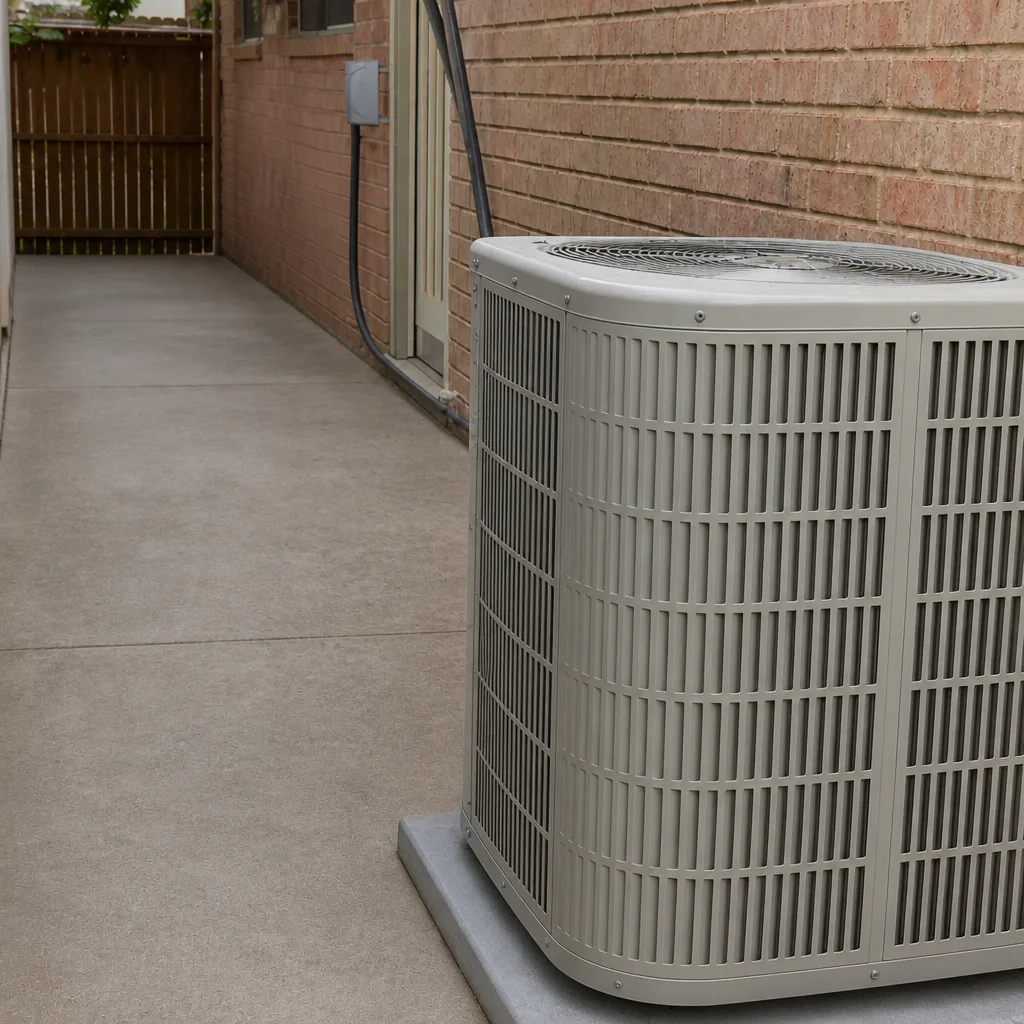
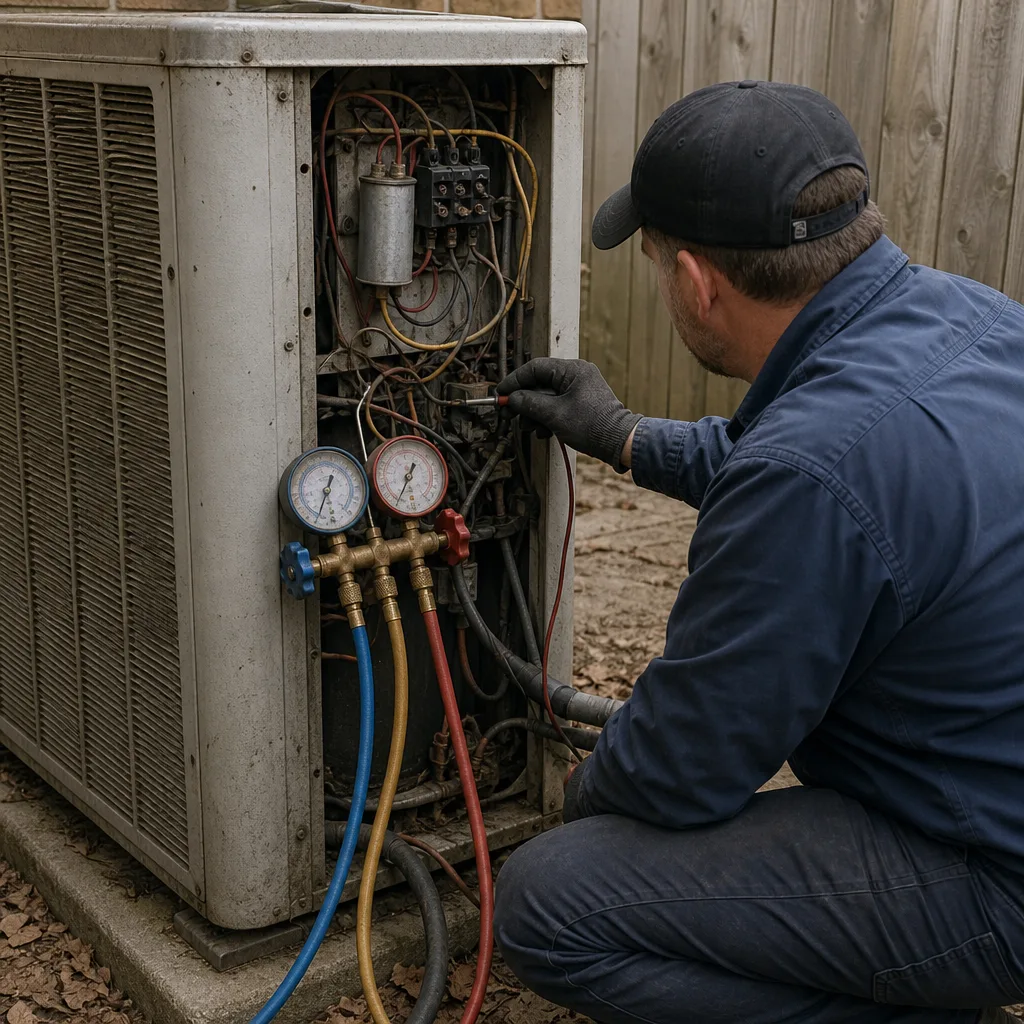
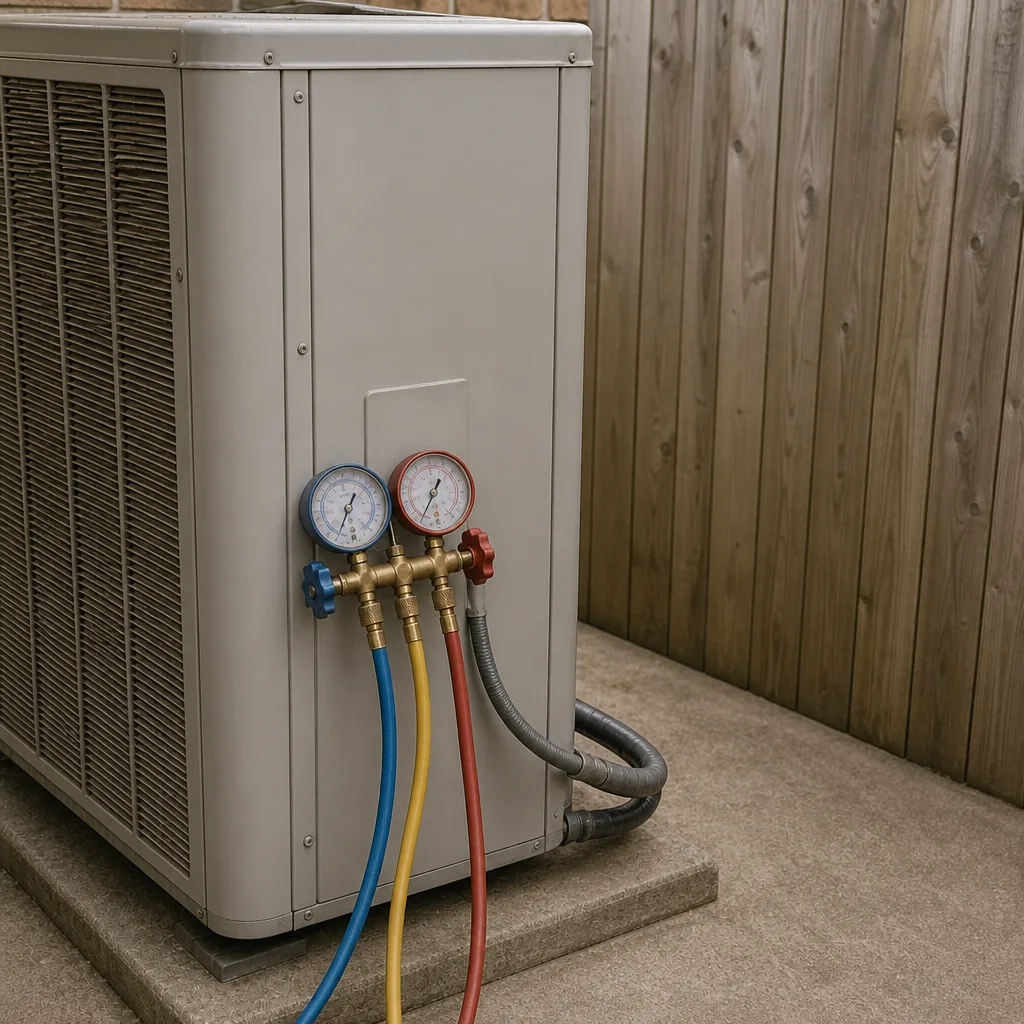
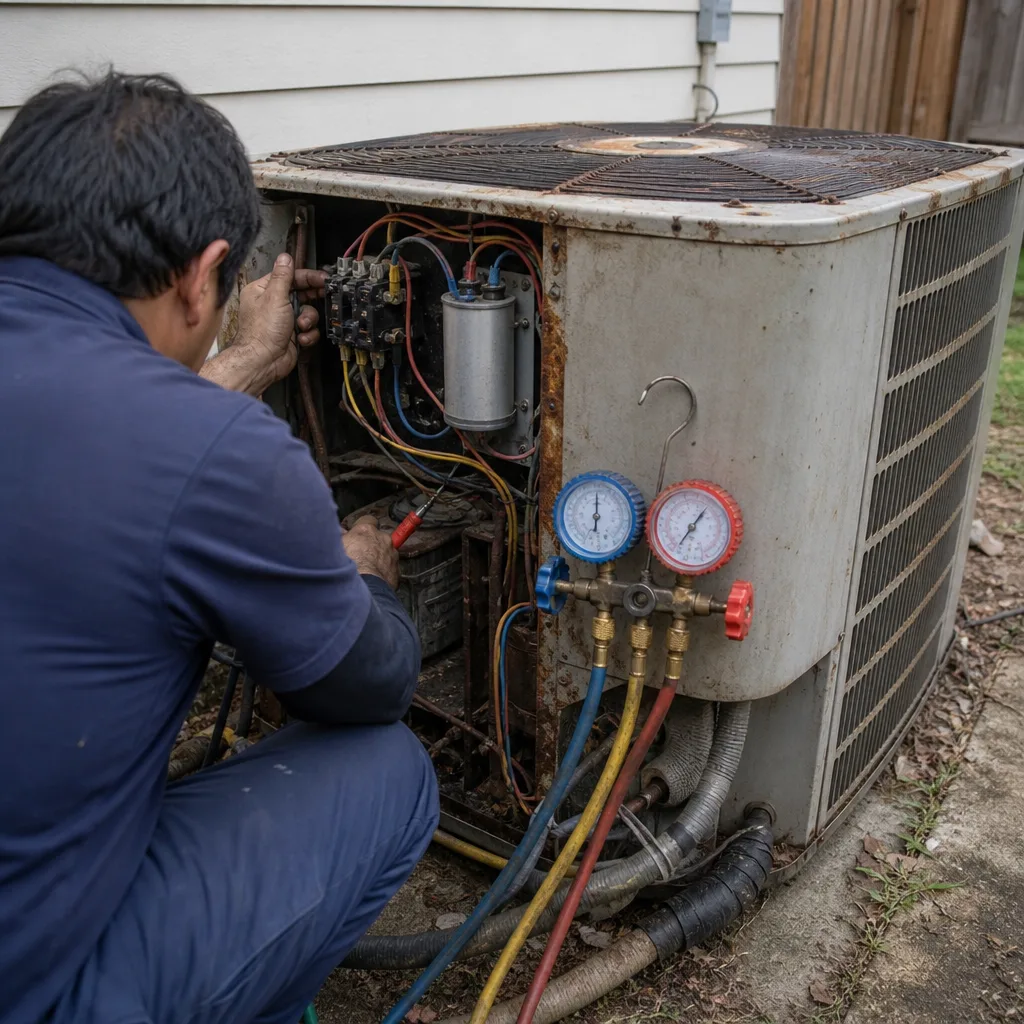
See the difference
 Before
 After
 Before
 After
 Before
 After
When to Call a Professional
Call a professional when the symptom involves refrigerant, electricity, gas, or anything inside the sealed cabinet. That means ice on the lines, no cooling on a hot afternoon, a burning smell, a breaker that trips when the system starts, or a musty smell from the vents. It also covers anything on the heating side, including an unfamiliar noise or smell when the furnace runs. Refrigerant, wiring, and gas components are genuinely dangerous to work on, and Texas licensing rules exist because mishandling them causes injuries. Don’t open a panel to investigate. Kingsley AC Repair offers free estimates in Irving. Call (855) 473-9031. We answer 24/7. Fast dispatch from 7am to 7pm, Sunday through Friday.
Frequently Asked Questions
Check the filter every 30 days through the cooling season, and replace it when it’s visibly gray, which in Irving can be every 45 to 60 days during the hottest months. Homes with pets or near construction go shorter. Manufacturers typically recommend 90 days, but that interval was written for a milder climate with fewer cooling hours. A loaded filter restricts airflow and puts your evaporator coil at risk. If you’re not sure what filter your system wants, call (855) 473-9031 for a quick answer, free estimate included.
Yes. A filter change handles airflow; it doesn’t check refrigerant charge, verify airflow metrics, clean the indoor coil, or test electrical components. Those checks require a licensed tech and, for refrigerant, EPA-certified handling. Many manufacturer warranties also require documented annual professional service. Schedule the tune-up before the season starts and keep the written report. Call (855) 473-9031 to book one; estimates are free.
Service intervals, warranty conditions, and test procedures differ by manufacturer. Carrier and many Bryant systems tie coverage to documented annual maintenance; Trane and American Standard emphasize charge and airflow verification. Lennox service literature puts weight on coil and drain condition. We’re trained and equipped to service nine major brands including Carrier, Trane, Lennox, Goodman, Rheem, York, Daikin, Bryant, and American Standard, so your system gets the service it actually specifies. Call (855) 473-9031 and tell us the brand and model.
You can remove surface debris from the outdoor condenser coil by hand and rinse it gently from the outside in. You should not clean the indoor evaporator coil yourself or open the air handler: that work involves the refrigerant circuit and live high-voltage components, and it requires a licensed tech. Hire a professional for anything involving the coil’s interior or the refrigerant lines. Call (855) 473-9031 for a coil inspection; estimates are free.
Keep every service invoice as a PDF with the date, technician, and work performed, store your model and serial numbers with your home records, register the equipment, and log your own filter changes. A written service report with measured readings is stronger evidence than a checkmark. If a warranty claim comes up, that paper trail is what gets it approved. Our team leaves a written report at each visit. Call (855) 473-9031 to schedule one.
Repair is usually the right call when the system is otherwise sound and the failure is isolated. Replacement makes more sense when repairs repeat often, the compressor or coil is at fault, or the equipment is near the end of its service life. We’re brand-neutral on that call: what your system actually needs drives the answer, not what’s easiest to sell. Our AC installation team can walk through both paths with you. Call (855) 473-9031 for a free estimate.
The Bottom Line
A maintenance checklist that fits Irving looks different from a generic one, because the cooling season here runs long and the dust and pollen load is real. Check the filter every 30 days through summer, clean debris from the outdoor coil monthly, book a pre-season tune-up with a written report, and follow your specific brand’s service interval: Carrier, Trane, Lennox, Bryant, and American Standard each carry their own warranty language. Leave refrigerant, electrical, and indoor coil work to a licensed tech. And keep your records. That’s the whole program, and it’s what protects both your comfort and your warranty. If you’d like help running it, we’re an HVAC specialist serving Irving since 2014, and our Kingsley AC Repair team handles repair, installation, and furnace work under one name.
Call (855) 473-9031 for a free estimate. We answer 24/7. Fast dispatch from 7am to 7pm, Sunday through Friday.
Written by the team at Kingsley AC Repair, serving Irving since 2014.