
Last updated November 14, 2026
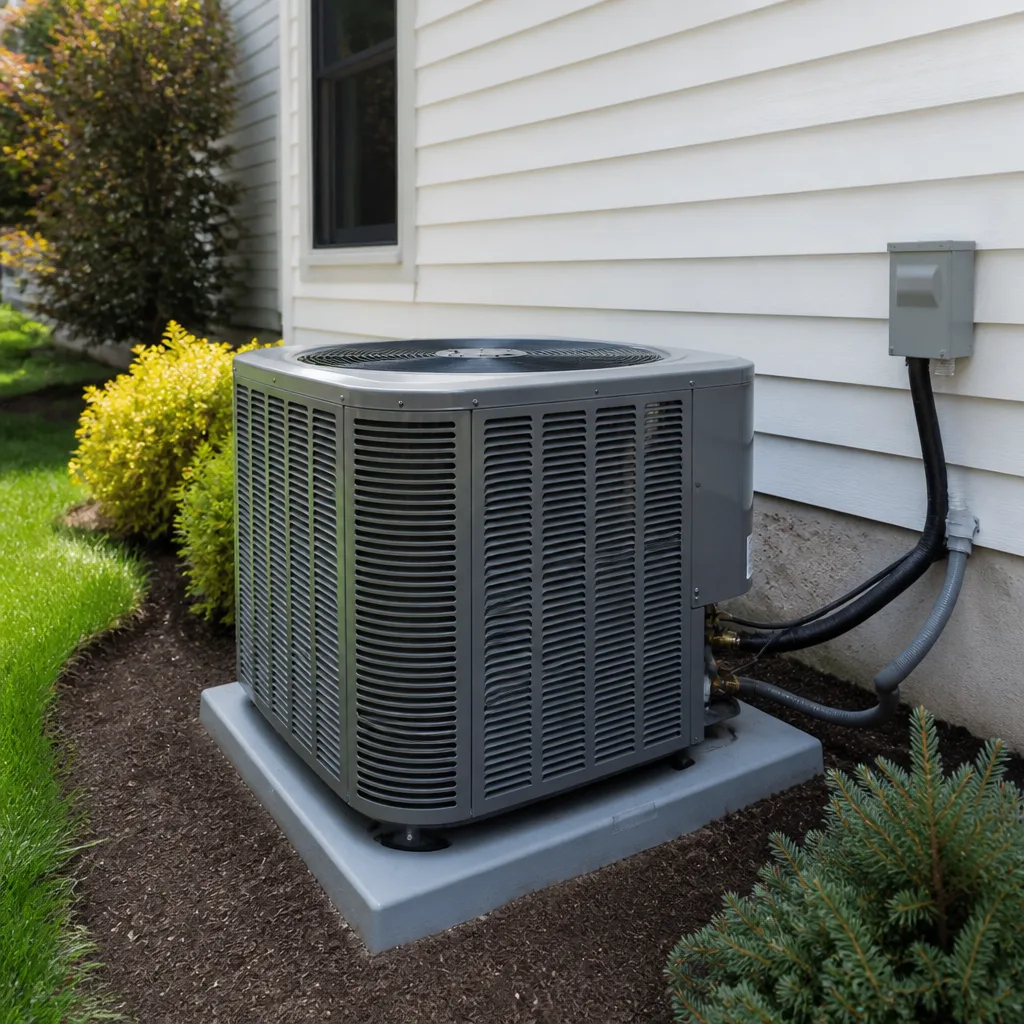 AC repair
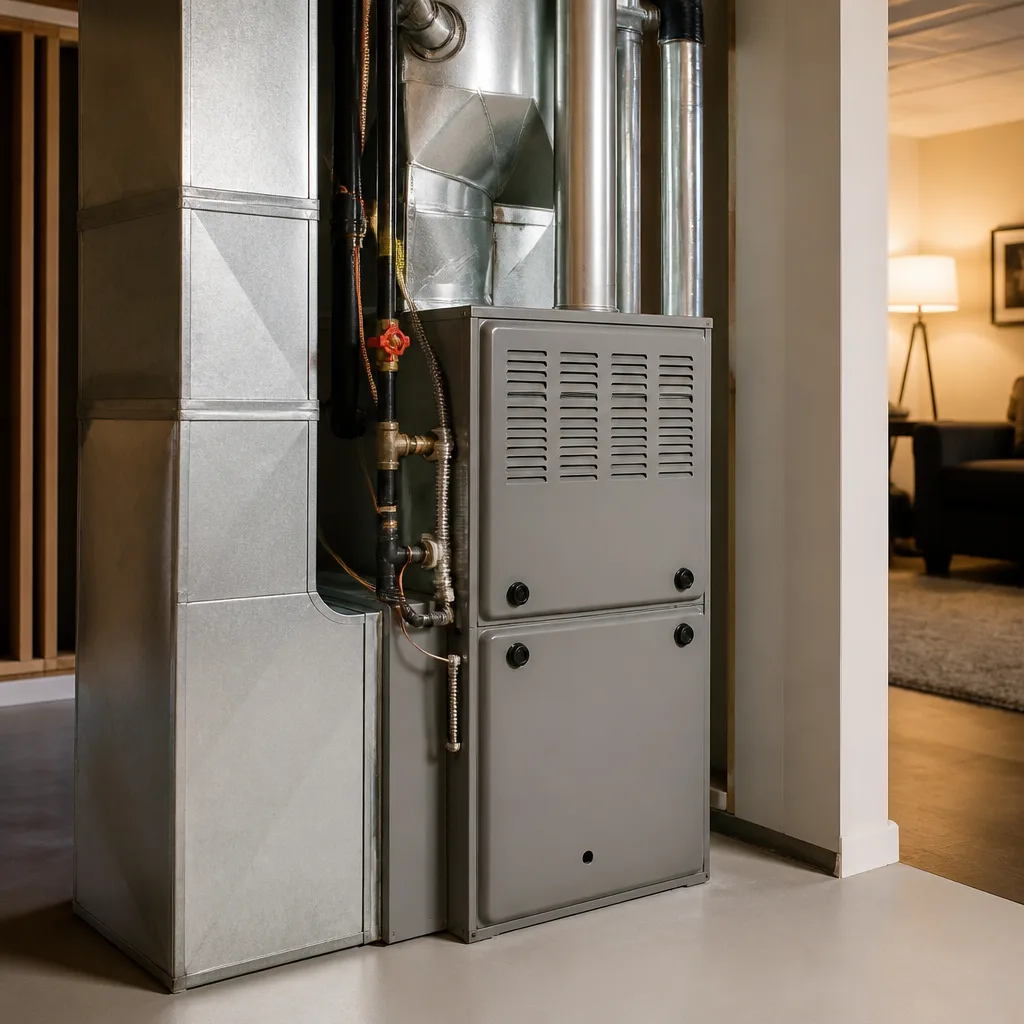 Furnace & heating
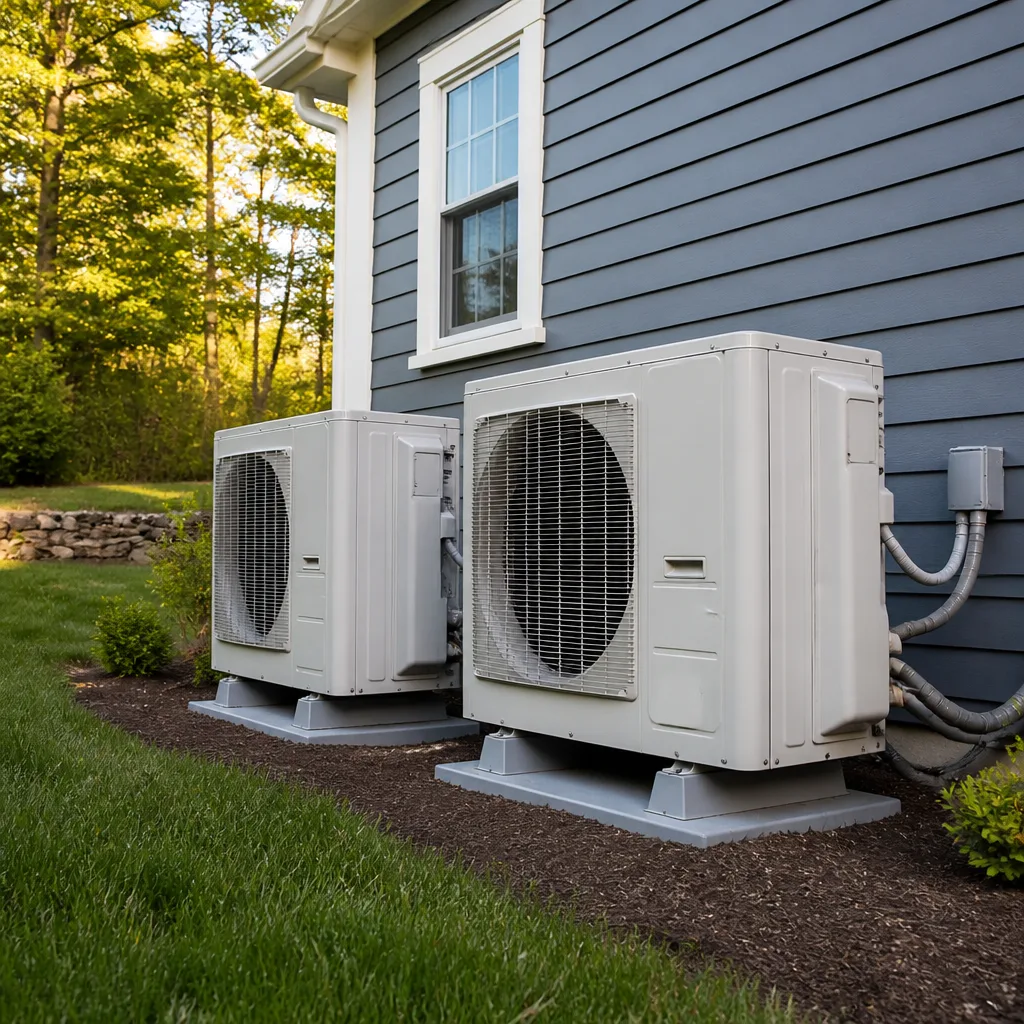 Heat pumps
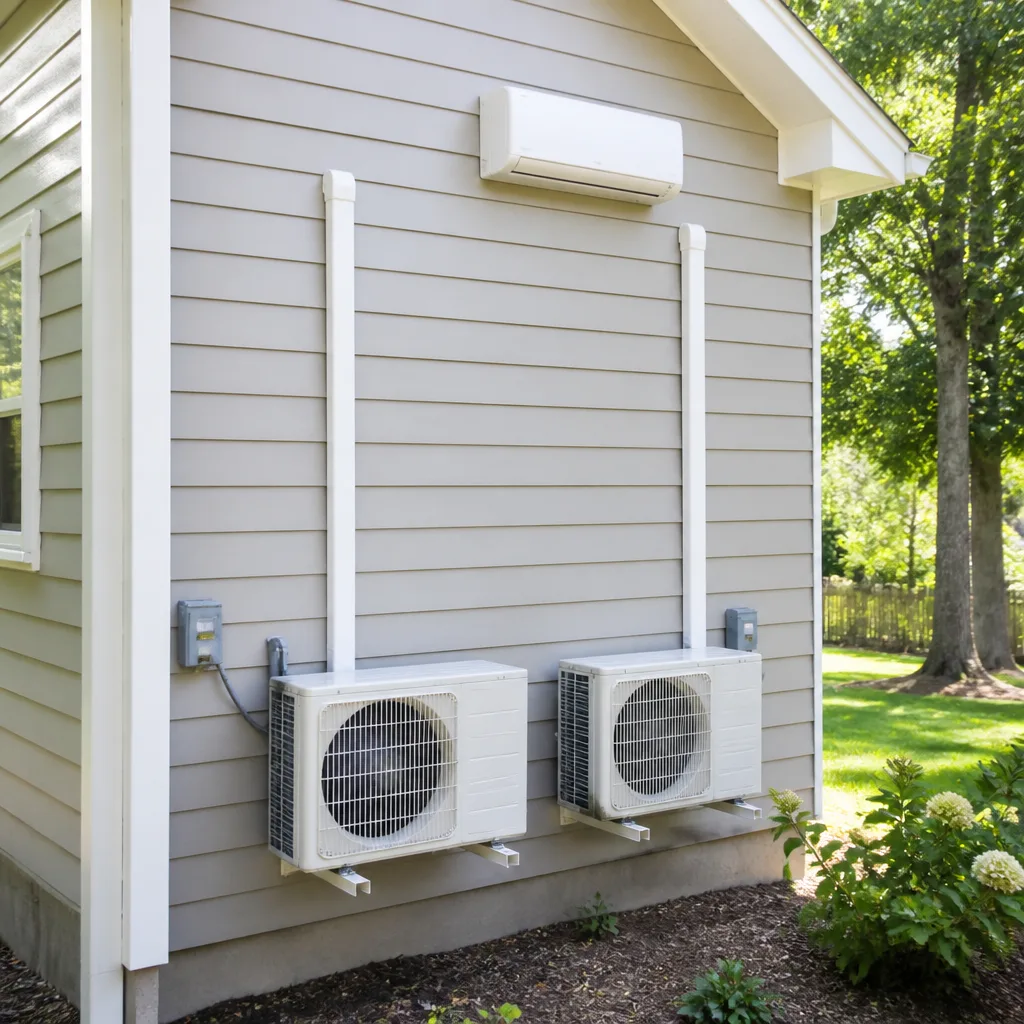 Ductless mini splits
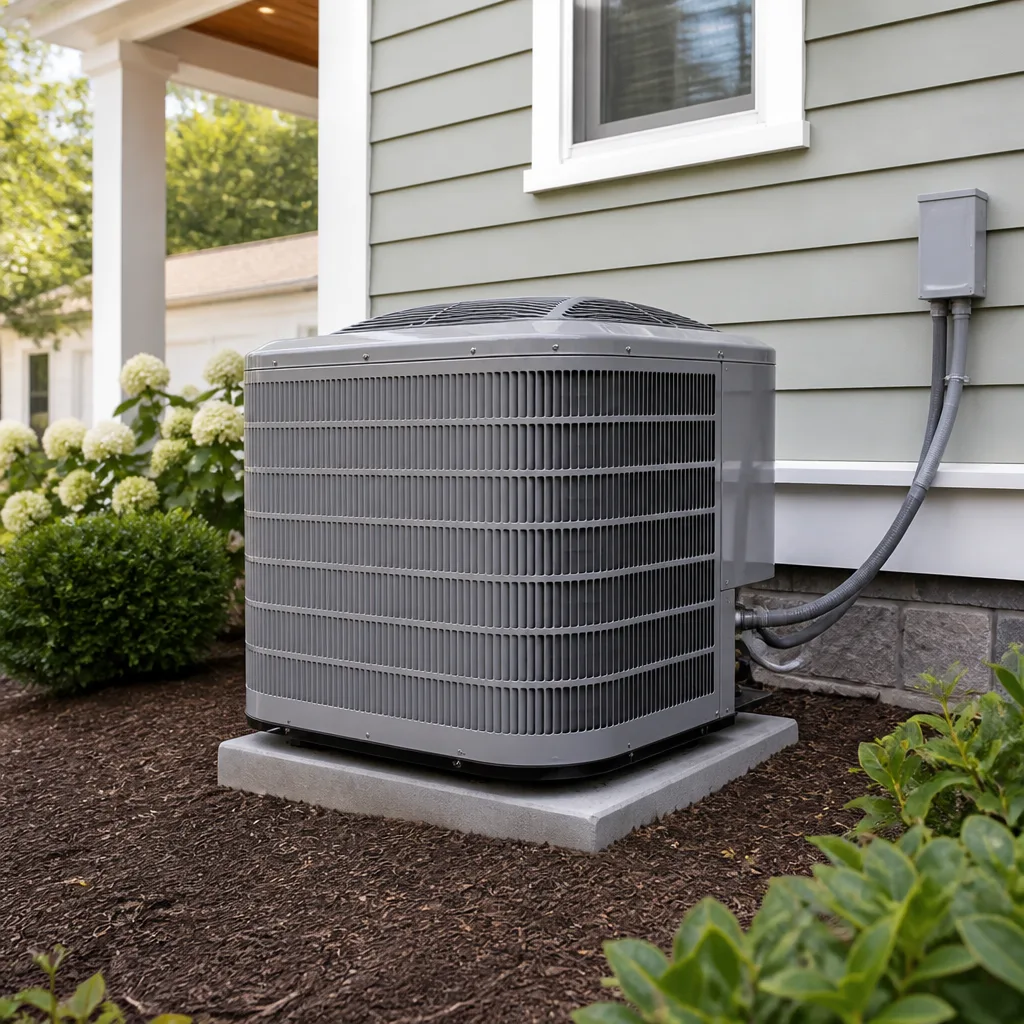 Carrier
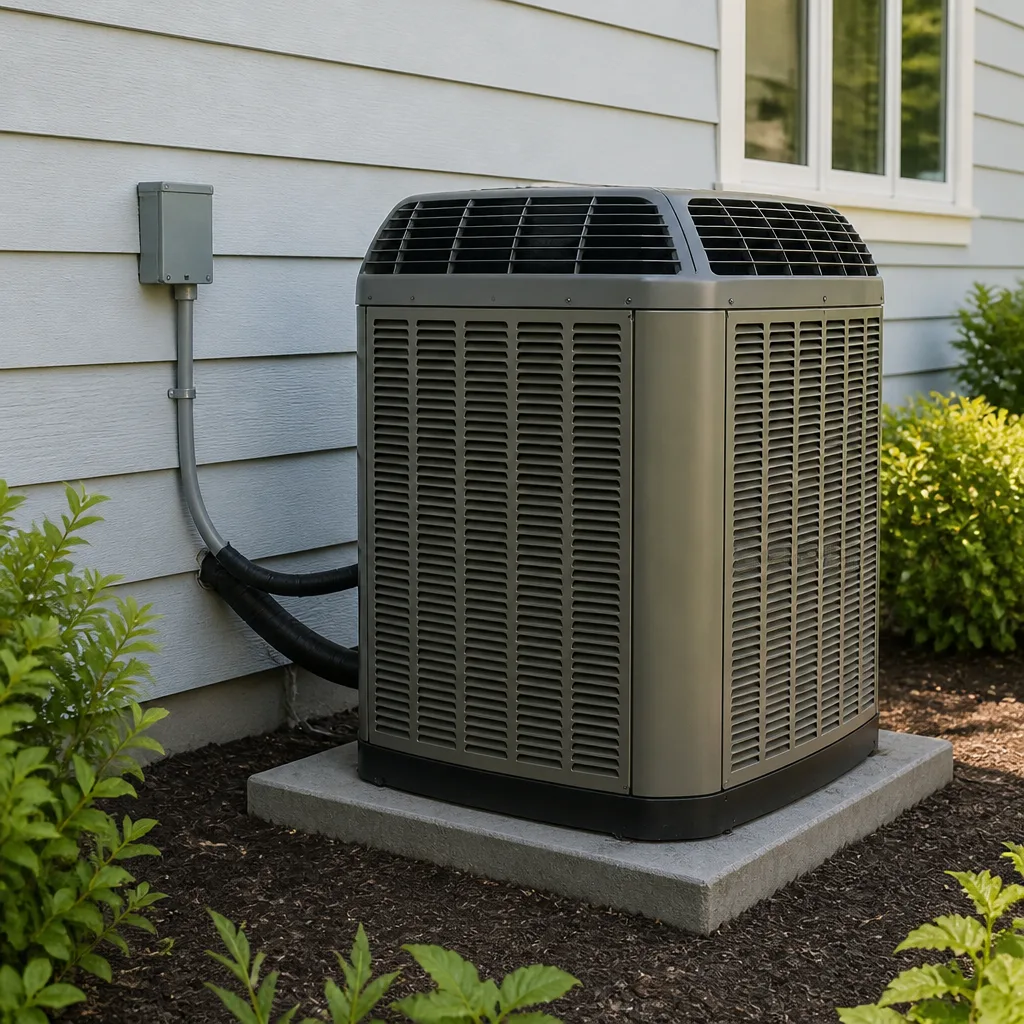 Trane
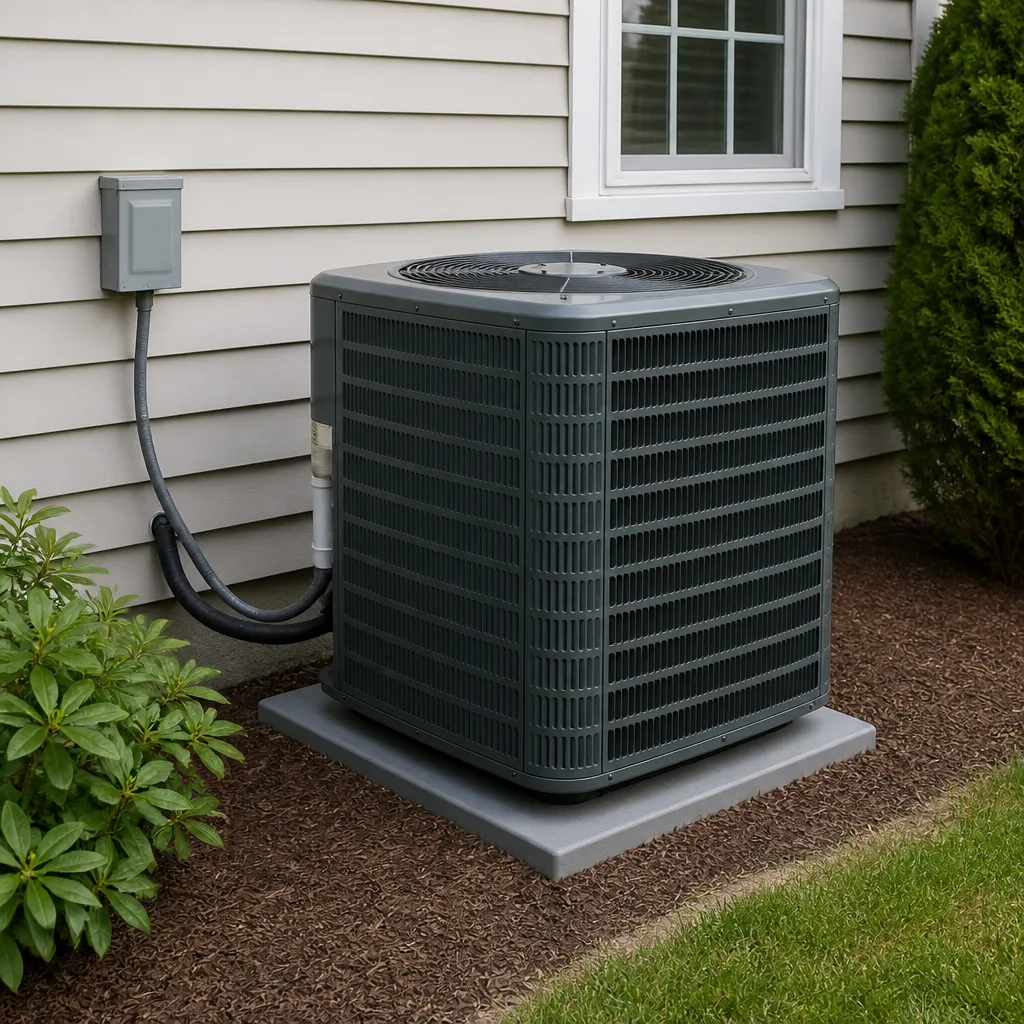 Goodman
Seasonal tune-up and full diagnostic on your Carrier, Trane, or Goodman system - readings shown to you before any repair is proposed
Diagnosis first, numbers second - you approve the repair price before a single part goes in.
Get your free estimateHVAC Warning Signs: An Irving Homeowner’s Reference Guide
Most homeowners treat every HVAC symptom the same way: something is off, so we should probably get it looked at. But a system that sounds fine and won’t cool, and a system that cools fine but sounds rough, are two completely different failure trajectories. Treating them the same way is how a small repair turns into a full replacement. The reasoning matters more than the list. In this guide we walk through how warning signs actually get read – which ones you can watch, which ones mean schedule a visit soon, and which ones mean shut the system down before you cause real damage. We’ve spent our working lives on this equipment in Irving, and this is the reference we’d hand a friend.
Quick Answer
HVAC warning signs fall into three urgency tiers: ignore-and-monitor (mild symptoms that may be nothing), schedule-soon (signs that point to a specific failing part), and shut-down-now (anything involving a burning smell, arcing, breaker trips, or a compressor knock). The most useful skill a homeowner can develop is telling the difference between refrigerant loss, airflow restriction, and electrical failure, because those three problems share surface symptoms but have completely different fixes. When you’re unsure, a free estimate beats a guess.
Styles & brands we work with
- AC repair
- Furnace & heating
- Heat pumps
- Ductless mini splits
- Carrier
- Trane
- Goodman
Table of Contents
- How to Triage Warning Signs by Urgency Tier
- The Three Problems Behind Most Cooling Complaints
- Why Short-Cycling Is So Common in Irving
- What Unusual Sounds Actually Mean by Component
- How to Describe a Symptom So Diagnosis Is Faster
- Seasonal Signs: Cooling Season vs. Heating Season
- Common Mistakes to Avoid
- Frequently Asked Questions
How to Triage Warning Signs by Urgency Tier
The single most helpful thing you can do before you call anyone is sort the symptom you’re seeing into a tier. That’s not about self-diagnosis. It’s about knowing whether it’s safe to run the system while you wait for a scheduled visit, or whether running it another hour is going to cost you a compressor.
Tier 1: Ignore and monitor. These are light symptoms that come and go. A faint rattle on startup that disappears. A slightly longer run time on the hottest afternoons. A small temperature swing upstairs compared to downstairs. Write down when they happen. If the pattern stays exactly the same for weeks, it may just be how your house behaves in summer. If the pattern gets worse, it moves up a tier.
Tier 2: Schedule soon. These are symptoms that point at a specific part heading toward failure. That includes short-cycling, water pooling around the indoor unit, ice on the refrigerant lines, a room that never gets comfortable, or a system that’s running noticeably longer than it used to. These aren’t a call-at-midnight problem, but they shouldn’t sit for a month either, because a failing capacitor or a restricted filter-drier is a cheap fix now and an expensive one later.
Tier 3: Shut down now. Some signs mean turn it off at the thermostat and leave it off:
- A burning or scorched smell anywhere near the indoor or outdoor unit.
- A breaker that trips more than once when the system calls for cooling or heat.
- Visible arcing, charring, or discoloration at the disconnect box outside.
- A loud rhythmic knock from the outdoor unit that sounds mechanical, not like airflow.
- Any smell of gas at the furnace, or soot at the flue.
Electrical panels, refrigerant circuits, and gas lines are genuinely dangerous components. Those are not homeowner projects, and we’d rather you shut the system off and wait than take a chance. Once everything is off, call a trained professional. Getting the tier right the first time is the difference between a $150 part and a $3,000 one, and it’s a big part of why we do brand-neutral diagnostics before we quote anything.
The Three Problems Behind Most Cooling Complaints
When a homeowner tells us, “It’s running but it’s not cold,” that single sentence points at three very different problems. Learning to listen for which one you’re in changes the entire conversation.
Refrigerant loss
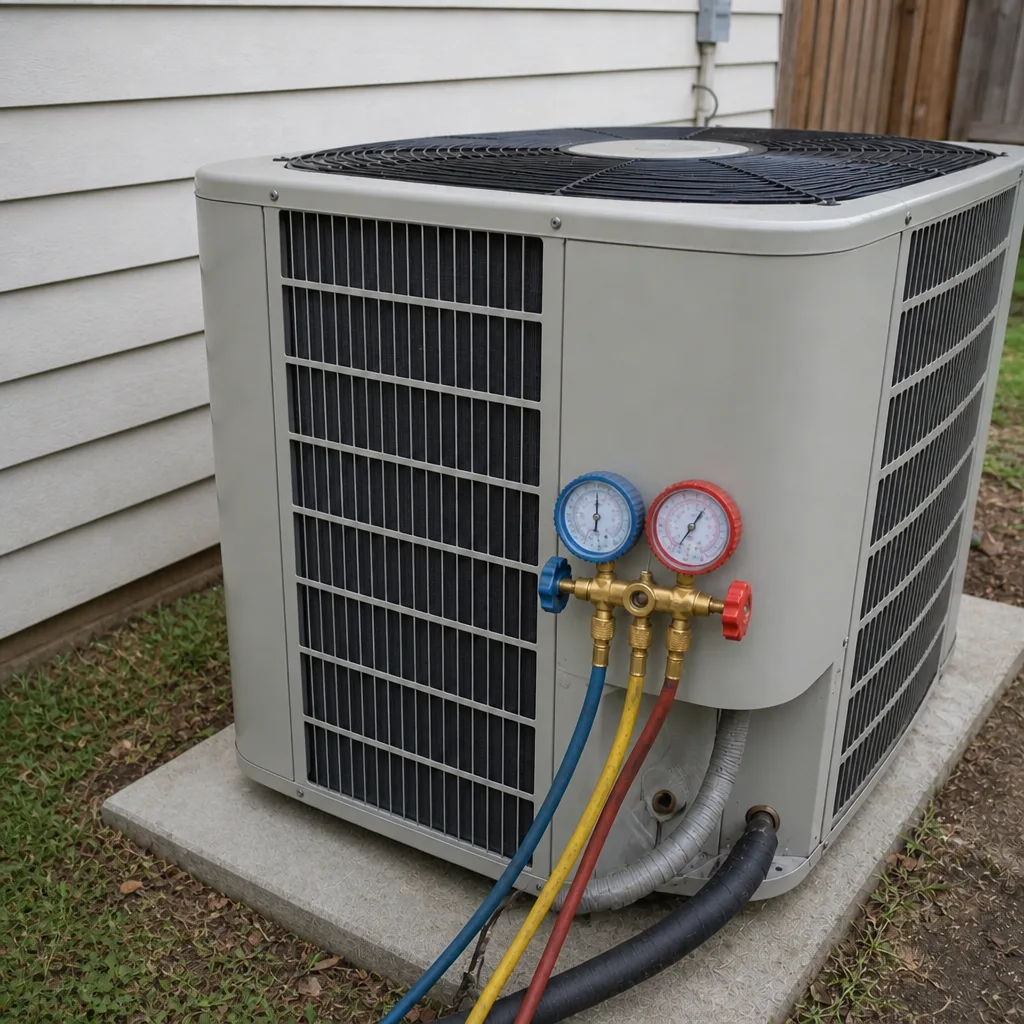
Refrigerant runs in a sealed loop. If the charge is low, it isn’t because the refrigerant was used up over time; it’s because there’s a leak somewhere. The classic signals are a system that runs nonstop without reaching setpoint, indoor supply air that feels cool but not cold, frost or ice forming on the copper line at the outdoor unit, and higher electric bills alongside the cooling complaint. Ice on the line is the giveaway that most homeowners miss, because it looks like the system is working hard. It’s not; it’s starved.
Airflow restriction
The system can have a perfectly healthy refrigerant charge and still feel weak because air isn’t moving. Symptoms include a compressor that sounds fine, a filter that’s visibly clogged, weak airflow at the registers, and a house that cools unevenly room to room. Filters, a return duct that’s undersized for the equipment, or a blower wheel that’s matted with debris all cause this. In our experience, a clogged filter is the single most common cause of “it’s not cooling like it used to” calls we get in Irving.
Electrical failure
This one is the trickiest, because the surface symptom is often identical to the other two: the system doesn’t cool. Behind it is a failing capacitor, a bad contactor, a loose connection, or a control board problem. The tells are a hum with no fan, a system that tries to start and clicks off, a tripped breaker, or a fan that only spins if you help it. Electrical failures are the ones you don’t want to troubleshoot by watching; they’re the ones that belong on a technician’s meter.
Notice the overlap. All three produce “running but not cold.” The reason a trained diagnosis matters is that replacing a filter won’t fix a refrigerant leak, and adding refrigerant to a system with restricted airflow will make it worse. That diagnostic sequence – airflow first, then electrical, then refrigerant – is the logic that keeps a small problem small. Our AC repair work starts there, not with a parts list.
Why Short-Cycling Is So Common in Irving
Short-cycling is when the system turns on, runs briefly, and shuts off again, then repeats every few minutes. It’s one of the most common warm-season complaints we handle in Irving, and in most cases, one of three causes is behind it.
- An oversized system. If a unit was installed without a proper load calculation, it will cool the house faster than it can dehumidify, and it will short-cycle all summer. This is a design problem, not a repair problem, and it’s the hardest of the three to live with long-term.
- A frozen evaporator coil. A restricted filter, blocked return, or low refrigerant charge can freeze the indoor coil. The system runs, stops reaching the thermostat, and cycles on its own internal safeties. Ice on the indoor cabinet or the suction line is the tell.
- An electrical component failing on start. A weak capacitor or a contactor with pitted contacts can cause the compressor to try, fail, and retry. The clicking and repeated restarts are a classic electrical signature.
There’s local context worth knowing. Irving summers are long, and the design temperatures here push systems to run near their rated capacity for months. A system that’s marginal on a 95-degree afternoon may be completely fine the rest of the year, which makes short-cycling easy to write off as “just hot weather.” It’s not. A system that cycles every few minutes wears its compressor, and compressor replacement is the most expensive repair on the cooling side. If short-cycling is happening most afternoons, get it looked at. This is one of the reasons we recommend a load calculation with every AC installation, so the system matches the house instead of fighting it.
What Unusual Sounds Actually Mean by Component
Sound is underrated as a diagnostic tool, but only if you know which part is talking. Here’s how to translate the noise.
The contactor buzz
A low, steady buzzing from the outdoor unit – usually right at the electrical panel on the side of the condenser – is the contactor. It’s a magnetic switch that closes the circuit and pumps the compressor. When it buzzes, it usually means it’s trying to pull in but can’t, either because the control signal is weak or the contacts are failing. It’s a small part. It’s also an electrical part, so it’s on the do-not-touch list.
The blower bearing squeal
A high-pitched squeal or whine that rises and falls with the blower speed is a blower motor bearing or a loose blower wheel. This one often starts as a soft chirp and becomes a steady squeal over a few weeks. It’s not dangerous, but it progresses, and a failing blower eventually seizes and takes the motor with it.
The compressor hard-start knock
A hard, rhythmic knock at the start of a cooling cycle is the earliest sign a compressor is struggling to start. This one belongs in Tier 3. If you hear it, shut the system off at the thermostat and call. Chasing a hard-start compressor with a friend with a toolkit is the fastest way to turn a repair into a replacement.
The rattle that isn’t mechanical
Not every noise is a part failing. A sheet metal panel vibration, a loose screw on a closet door, or a return grille that rattles only at certain speeds can all sound exactly like a failing component. It’s why the sound’s location matters as much as the sound itself. When you call, note where you heard it, not just what it sounded like. Our technicians work with Trane, Lennox, Goodman, and Rheem equipment regularly, and the ability to say “the rattle is coming from the closet, not the outdoor unit” saves real diagnostic time.
How to Describe a Symptom So Diagnosis Is Faster
The words you use when you call change how quickly a technician gets to the problem. Vague descriptions force a longer visit. Specific ones point straight at the cause.
Here’s the vocabulary that matters, and it’s the same vocabulary we use on the truck:
- Not cooling vs. not running. The first means the system is on but air isn’t cold. The second means it won’t turn on at all. Different problems.
- Weak airflow vs. no airflow. Weak means you feel something but it’s not enough. No airflow means the registers are silent. Different causes.
- Short-cycling: on/off more often than usual, usually every few minutes. If you can time it, give the interval.
- Continuous run: on and never shutting off to reach setpoint. That’s different from short-cycling.
- Water at the indoor unit or in the drain pan: where exactly? On the floor, in the pan, or dripping from the coil?
- Ice: on the copper line at the outdoor unit, on the indoor cabinet, or both? This one detail alone points the technician at the refrigerant or airflow side.
- The noise: buzz, squeal, or knock – and where. That word matter.
Two more details help more than you’d guess. First, the make and model of the equipment if you have it, usually on a plate on the outdoor unit or the furnace cabinet. Second, whether the symptom is worse at certain times of day, or under certain weather. If you already know you have a Trane or a Rheem, say so. We can pre-load the right reference material, bring common parts, and avoid the second visit. A homeowner shouldn’t have to explain their own equipment to their technician, and the fastest way to get there is to name what you own. This is the same reasoning we use across the Irving area every cooling season.
Seasonal Signs: Cooling Season vs. Heating Season
Warning signs change with the season, and a lot of homeowners miss the winter ones because the system still runs – it just doesn’t feel right.
Cooling season (late spring through early fall): water pooling near the indoor unit, ice on the lines, weak airflow, short-cycling, unusually high electric bills, and the “running but not cold” complaint. These cluster around refrigerant and airflow issues, because summer is when the system works hardest and those weaknesses surface.
Heating season (late fall through early spring): a furnace that heats the house too slowly, a burner that fires and shuts off repeatedly, a faint smell on startup versus a persistent smell, unusual noise at the furnace cabinet, or a chimney flue that looks off. Faint smell on first start after a long off-season is common and usually burns off; persistent odor is not. Anything involving gas or the flue is a shut-it-off-and-call situation, without exception.
There’s a specific local detail for Irving that’s easy to forget. Winters here are mild enough that a homeowner can miss a failing furnace all season, because the system isn’t pushed hard. When cold snaps arrive, the system gets its first real test, and that’s when it fails. Test your heat in the fall, before it’s needed, not on the first cold morning. A little pre-season run is a cheap way to catch a problem before the whole house is relying on it.
Because we cover heating and cooling under the same roof, the shape of the diagnosis is consistent. Our Kingsley AC Repair technicians run the same triage sequence in furnace season that they run in cooling season. That’s not just for consistency’s sake. It means the technician who knows your system from summer is the one who sees it in winter.
Common Mistakes to Avoid
- Adding refrigerant without finding the leak. Refrigerant in a healthy system stays where it’s supposed to be. If it’s low, there’s a leak. Topping off without finding it just delays the next call and stresses the compressor in the meantime.
- Treating short-cycling as “just hot weather.” Short-cycling every few minutes on a warm afternoon is a symptom. Left alone, it grinds down the compressor, and compressor replacement is the most expensive repair on the cooling side.
- Washing the outdoor condenser with a pressure washer. High pressure bends the fins and reduces airflow. A light rinse or a soft-brush cleaning by a technician is all it needs.
- Swapping a filter for a heavier one to “improve air quality.” Very high-MERV filters can be too restrictive for the equipment. If your system calls for a specific filter size and type, exceeding it can starve the blower and cause short-cycling.
- Ignoring a tripped breaker more than once. A breaker that trips twice is telling you there’s a fault. Reset it once and see; if it trips again, stop resettings. That’s a Tier 3 symptom and belongs to a technician.
- Running the system with ice on the line “to see if it melts.” If there’s ice, the system is starved. Running it longer makes the ice worse and can push a small repair into a compressor replacement.
- Calling a general handyman for a cooling problem. HVAC is one trade with its own tools and instruments. A generalist will often diagnose by guessing, which is the opposite of what the equipment needs.
See the difference
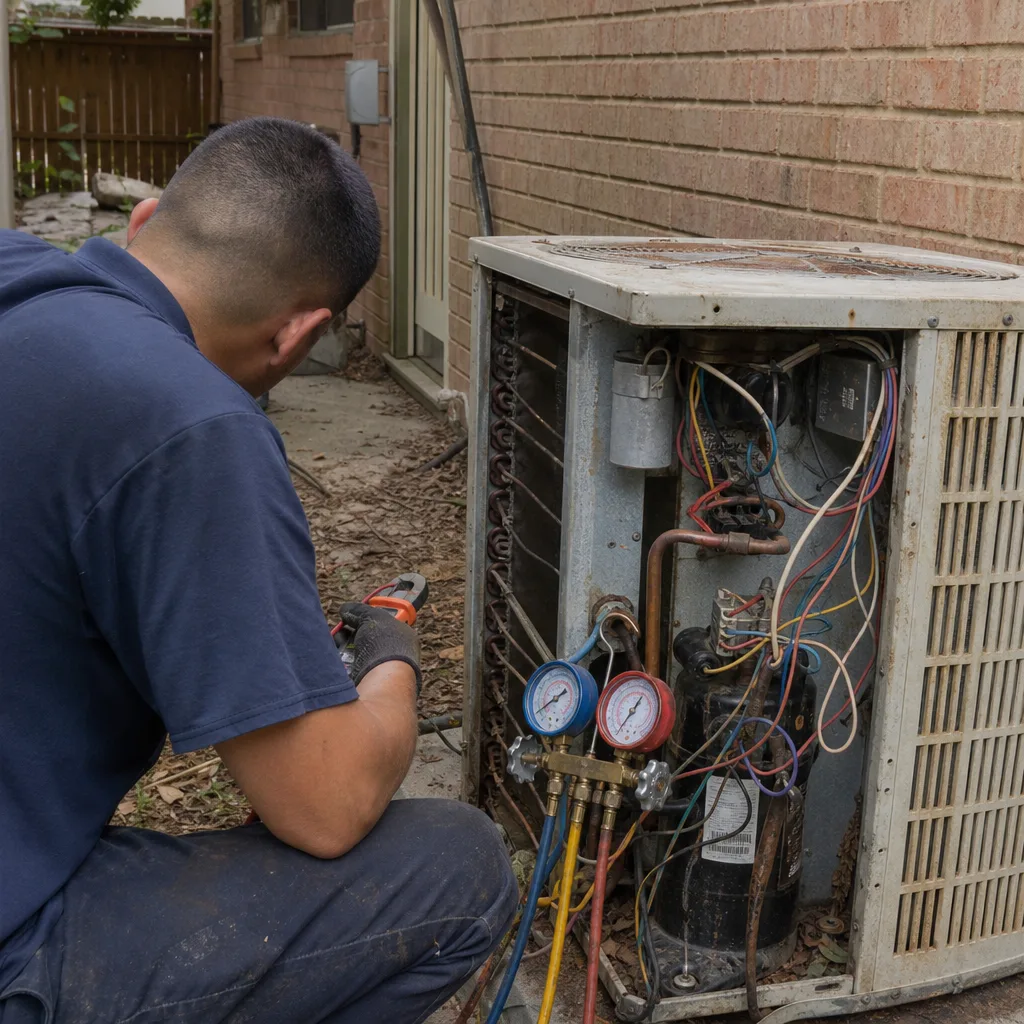 Before
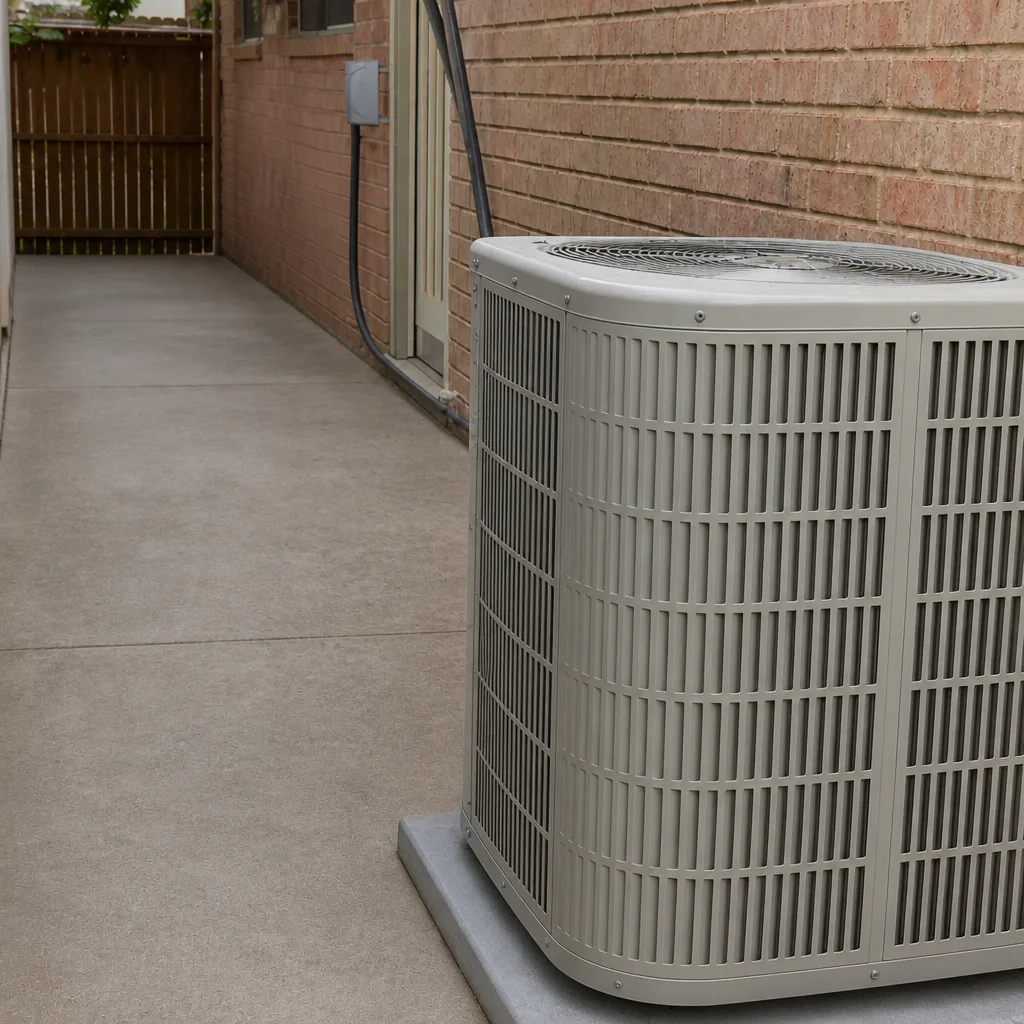 After
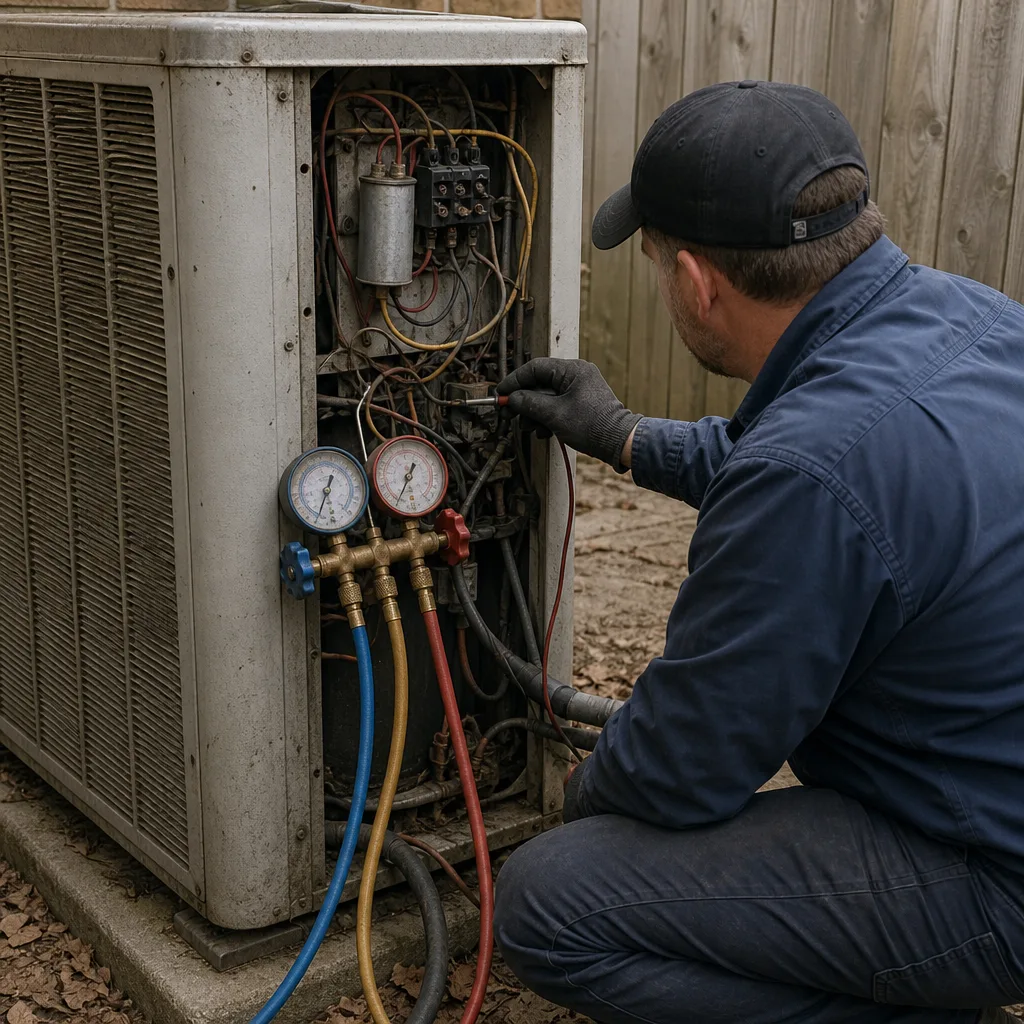 Before
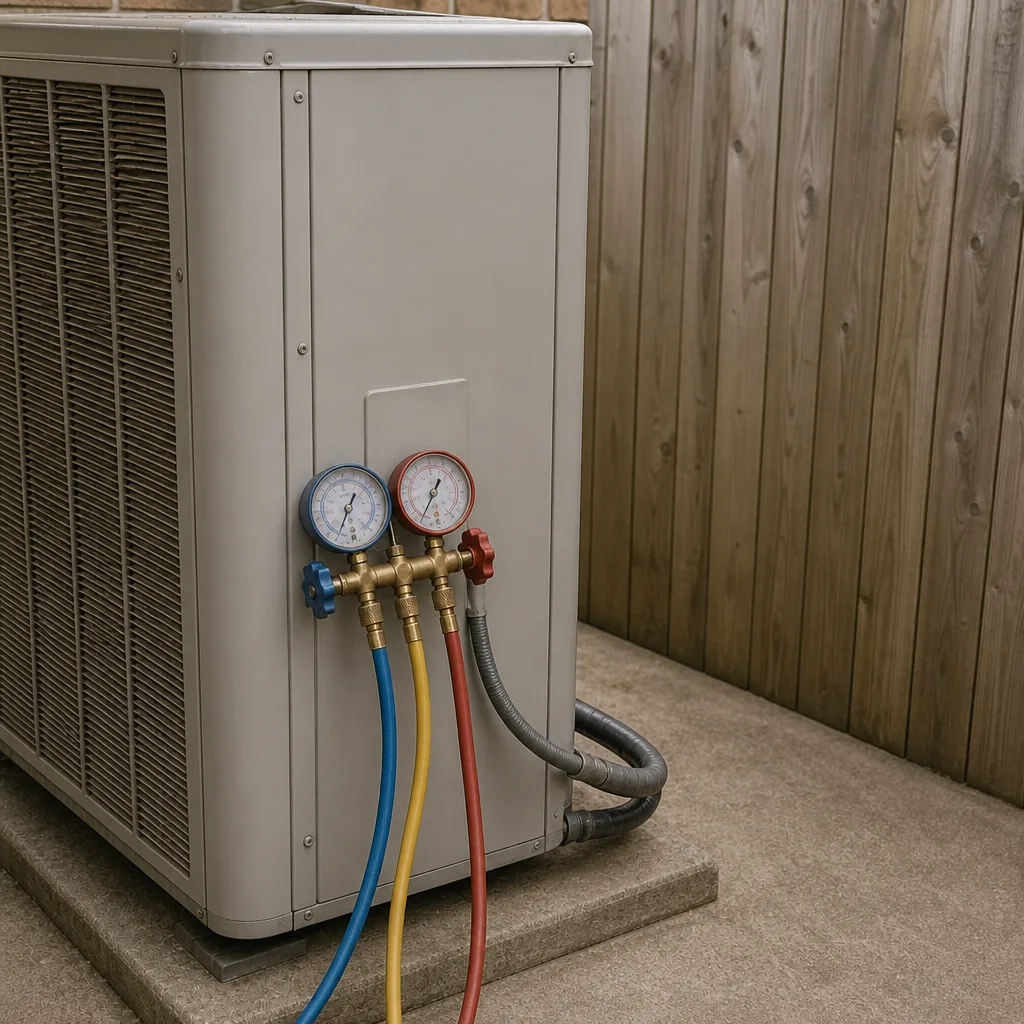 After
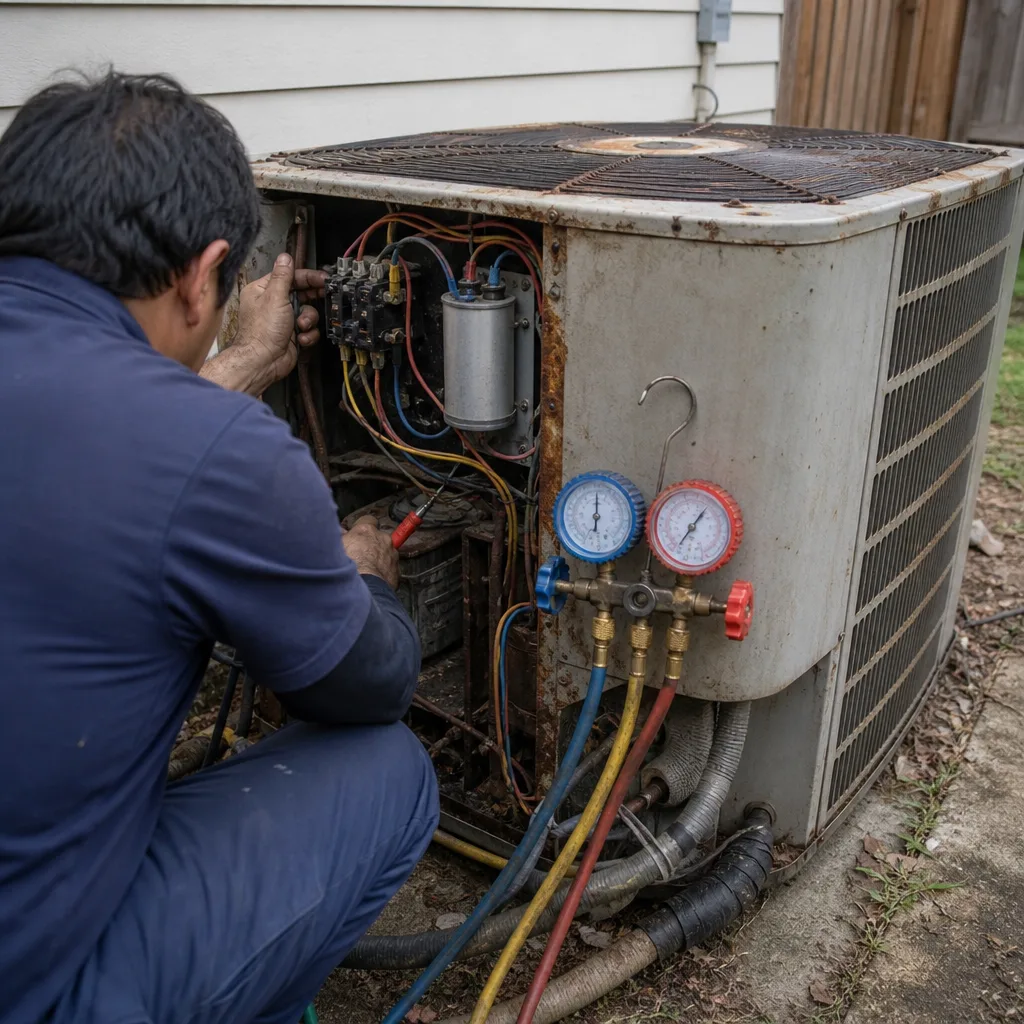 Before
 After
When to Call a Professional
Call a professional if any of the following apply: the system trips a breaker more than once, you smell gas or burning, you hear a mechanical knock from the compressor, ice forms on the refrigerant lines, the indoor unit is leaking water you can’t stop, or the system won’t reach temperature in either heating or cooling. All of these are outside homeowner territory. Even for the borderline cases – weak airflow that doesn’t respond to a filter change, short-cycling every few minutes, a room that’s consistently off from the rest, or a system that runs longer every month – a call is cheaper than a wait. Kingsley AC Repair offers free estimates in Irving, and our technicians are HVAC specialists, not multi-trade generalists. Call (855) 473-9031. We answer 24/7, with fast dispatch from 7am to 7pm, Sunday through Friday.
Frequently Asked Questions
Weak airflow, usually caused by a clogged filter or restricted return duct. It’s the most common sign we see because it develops slowly so homeowners stop noticing it. If you can’t remember the last time the filter was changed, that’s the first thing to check. If a fresh filter doesn’t fix the airflow, call (855) 473-9031 for a free estimate.
Ice on the copper line at the outdoor unit usually points at refrigerant loss, while weak airflow at the registers with no ice is more often a filter or duct restriction. Both can be present at once, which is why a technician checks airflow first and then refrigerant. Call (855) 473-9031 and describe what you see; the answers change fast once we know which side the problem is on.
Yes, if it happens most afternoons. Short-cycling wears the compressor, and compressor replacement is the most expensive cooling repair. Three common causes in this climate are an oversized system, a frozen evaporator coil, or a failing electrical component on start. Get it looked at before summer peak. Call (855) 473-9031 – estimates are free.
If the rattle is a loose panel or a grille, it’s harmless and easy to tighten. If it sounds mechanical and comes from the outdoor unit, stop and call. The difference matters: mechanical knocks are Tier 3, and a panel rattle is Tier 1. When you’re not sure which it is, shut it off at the thermostat and call (855) 473-9031.
The behavior (not cooling, not running, short-cycling), the location of the symptom (outdoor unit, indoor closet, register), the equipment make and model, and anything you’ve already tried. Even naming the brand – Trane, Lennox, Goodman, Rheem – helps us come prepared. Call (855) 473-9031 and we’ll walk through it with you.
It depends on what’s failing and how often. A single electrical repair on otherwise healthy equipment is usually worth it. Repeated repairs across different components in the same season is a sign to look at replacement options. We diagnose first and give you a straight answer based on the system’s condition, not on what we want to sell. Call (855) 473-9031 for a free estimate.
The Bottom Line
The most useful HVAC skill a homeowner can develop isn’t knowing every possible symptom. It’s sorting what you’re seeing into a tier and describing it accurately. A buzz at the contactor, a squeal at the blower, and a knock at the compressor are three completely different problems, and only one of them is a shut-it-off situation. Short-cycling in Irving is usually an oversized system, a frozen coil, or a failing electrical part. Get the tier right early, use the vocabulary that points at the component, and the diagnosis gets faster and cheaper. Most warning signs are cheaper to act on than to wait out.
Call (855) 473-9031 for a free estimate. We answer 24/7. Fast dispatch from 7am to 7pm, Sunday through Friday.
Written by the team at Kingsley AC Repair, serving Irving since 2014.